Marginalia, 3: On Ambition

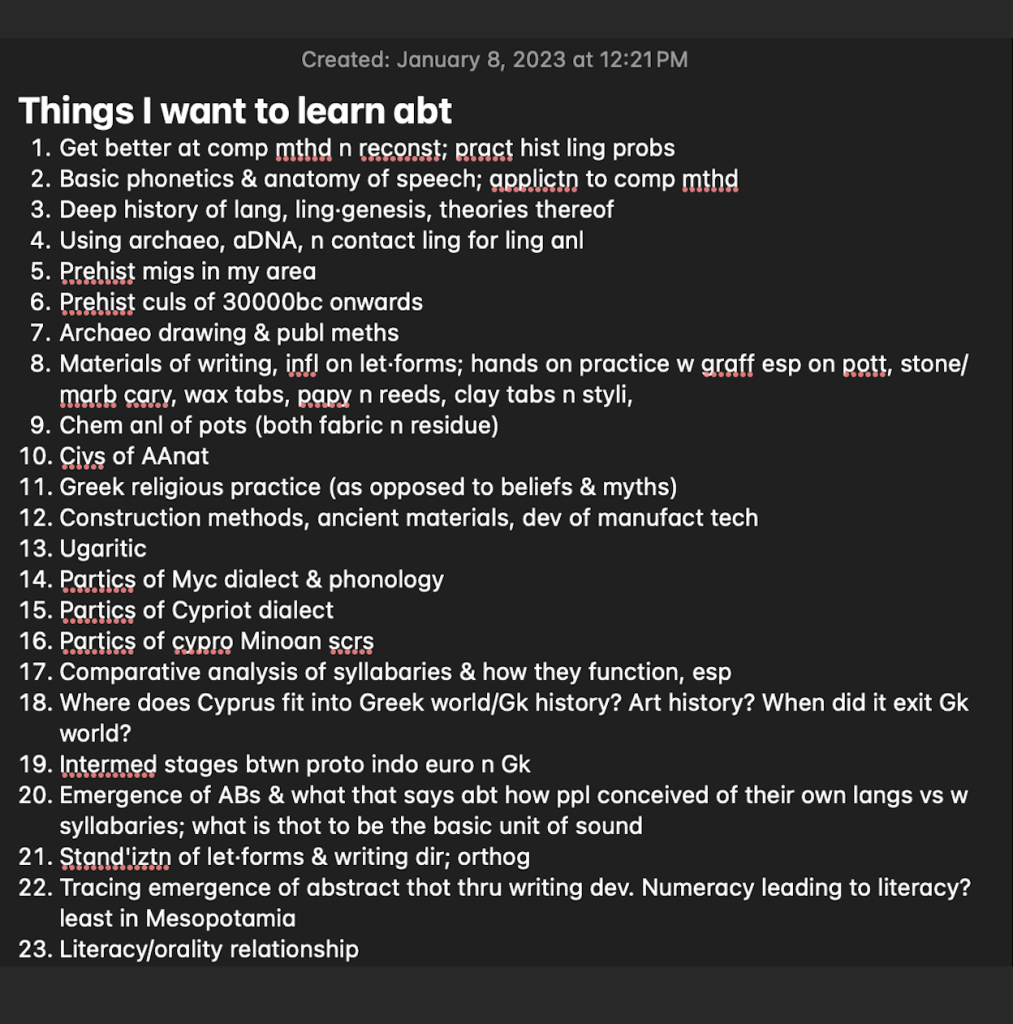
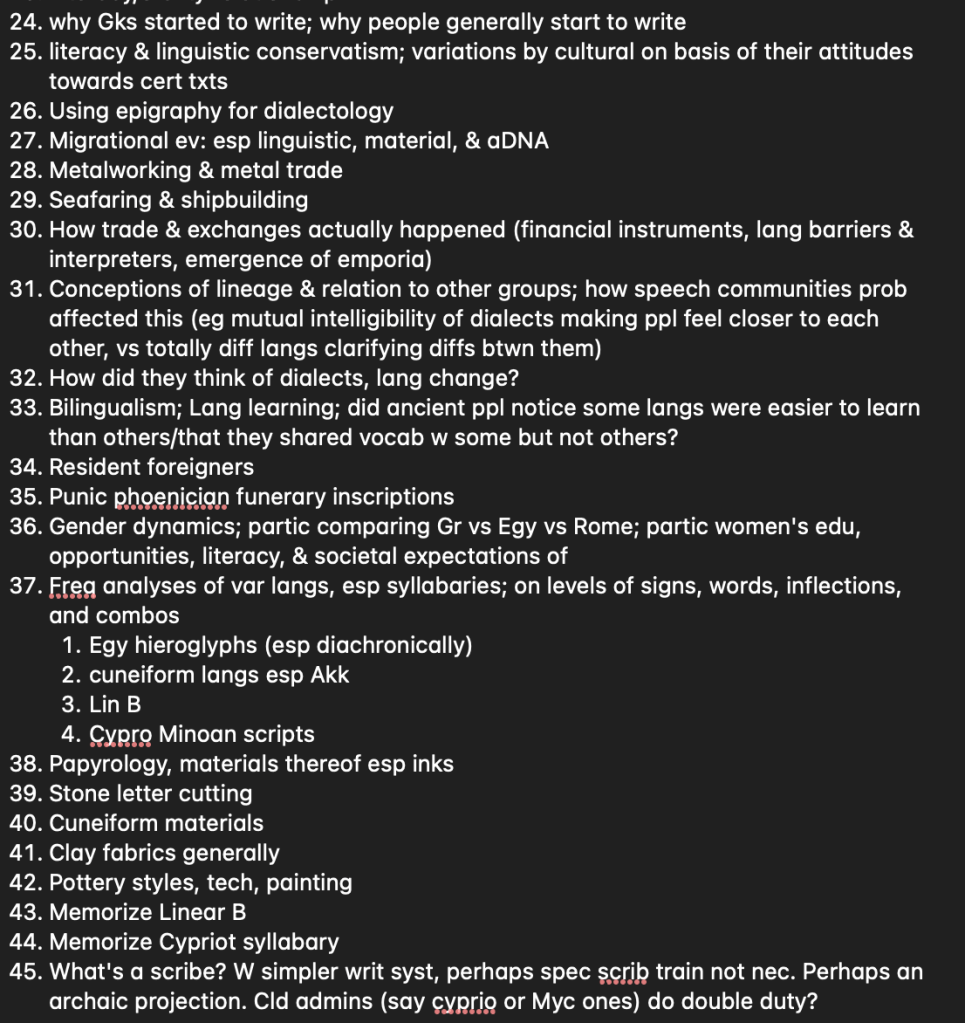
Ambition is slippery, often suspect. And still, I think about it all the time, as a structure: something that shapes the arc of my work, and the conditions of its possibility. What I want isn’t fame or visibility; it’s to mean it when I speak and act.

For me, ambition is a kind of scope. It’s not about ascent but coherence. I want to go deep, yes, but I don’t think depth is possible without breadth. Otherwise, you miss the long roots, the outer edges, the forces that frame what you’re doing. In short, you miss the world. Ambition, then, is the drive to situate things well—to push not just further, but outward, so that the work holds under pressure.

Still, it’s not just intellectual. Praise complicates things, and I’m not immune to the personal dimensions of it. I can feel something shift when praise becomes internal validation rather than an external confirmation that I’m on the right track. That’s when I know I’m drifting—not toward ambition, exactly, but away from the version of it that serves me best. Real ambition, I think, has far more to do with one’s own awe than other people’s approval. It’s the feeling that more is possible—and that you are capable of honoring that possibility, at least partially.

That said, I don’t moralize ambition. It’s not a vice to strive. What matters is what you’re striving toward, and I organize my life around that striving. Not because I want to become a certain kind of person—ambition as self-stylization doesn’t appeal to me—but because I care about what the work might do for the world. I want to make tools, ask questions that last, and help other people do the same.

I don’t talk about this much. Who do I think I am? I’d rather let the work speak for itself. But I don’t think ambition needs to be claimed aloud to be real. If it’s there, it shows—quietly, in what gets built, in what gets revised, in what refuses to settle for just being good enough. That inner flame doesn’t need announcing—only tending.

Comments

4 responses to “Marginalia, 3: On Ambition”

  1. Schyuler Lujan Avatar

    Thank you for this insightful post on reframing our understanding of ambition. In our work to revitalize our language, my partner and I often say we are ‘chasing the horizon of fluency.’ There’s a thrill in it—a daring belief that more is possible and a sense of wonder at what awaits us if we only keep going.

    Because of my own discomfort with the word ‘ambition’—it’s not always seen as a good thing in my culture—I’ve realized I shied away from using it. I appreciate the way you’ve framed ambition here, offering a perspective that makes me reconsider how I engage with it.

    And I really like your blog. It has been a long time since I’ve found something on the internet that makes me pause and think in this way. I appreciate you sharing your work here, as it’s an area I never would have considered exploring. Si Yu’us Ma’åse! (Thank you!)

    Liked by 1 person

    1. Theodore Fitzgerald Avedisian Van de Walle Avatar

      Thank you so much for your thoughtful comment. I really like the phrase “chasing the horizon of fluency”—it captures that mix of drive and wonder that I was trying to get at: that striving need not be about arrival.

      I really appreciate what you shared about cultural discomfort with the word “ambition.” Part of what I hoped to do in the piece was open up space for people to see ambition differently, if they wanted to—and your reflection does that too, in its own way.

      Thanks also for the kind words about the blog. I’m glad it gave you something to think with, and I’m wishing you and your partner good momentum in your language work. Si Yu’us Ma’åse, and take care.

      Liked by 1 person

  2. Marginalia, 6: On the Doubt – To Wake the Dead Avatar

    […] Marginalia 3 was about the spark that begins a project, this is about what happens when the spark dies down. To […]

    Like

  3. Introduction (Pinned) – To Wake the Dead Avatar

    […] On Ambition — drive, discipline, and awe for the work […]

    Like

Leave a reply to Theodore Fitzgerald Avedisian Van de Walle Cancel reply