Tag: the close read

  • The Close Read, 2: “One Art,” Elizabeth Bishop

    The art of losing isn’t hard to master;
    so many things seem filled with the intent
    to be lost that their loss is no disaster.

    Lose something every day. Accept the fluster
    of lost door keys, the hour badly spent.
    The art of losing isn’t hard to master.

    Then practice losing farther, losing faster:
    places, and names, and where it was you meant
    to travel. None of these will bring disaster.

    I lost my mother’s watch. And look! my last, or
    next-to-last, of three loved houses went.
    The art of losing isn’t hard to master.

    I lost two cities, lovely ones. And, vaster,
    some realms I owned, two rivers, a continent.
    I miss them, but it wasn’t a disaster.

    —Even losing you (the joking voice, a gesture
    I love) I shan’t have lied. It’s evident
    the art of losing’s not too hard to master
    though it may look like (Write it!) like disaster.

    Can loss be mastered, or merely rehearsed?

    Bishop’s villanelle proposes, in a way, that repetition is training, can be practiced, that form and control can make loss bearable. Her composure in the face of grief is compelling; stoicism always tempts the wounded mind. Yet the paradox of tone and form—her unflappable cant, the neat tercets, its refrain that promises discipline where grief ought to exist—is impossible to ignore.

    The form is an argument, and its unraveling coherence speaks to a profound tension. Each recurrence of the refrain weakens its authority, until mastery itself begins to sound like mimicry. The poem’s structure mimics denial. Every return of “The art of losing isn’t hard to master” sounds more and more like self-persuasion than wisdom. There’s this extreme rhetoric of control that is increasingly overtaken by the tremor of what escapes it.

    Form as containment—that’s the key thread here. The villanelle is a form obsessed with return, which makes it an ironic vessel for a poem about moving on. Syntax becomes a kind of fate, in my opinion: by choosing this structure, Bishop cages herself in an inescapable neurosis, no doubt intentionally. As with all forms we cling to—habit, routine, scholarship—it becomes both ritual and trap.

    Her quasi-enjambment, too (“—Even losing you…”), stretch the villanelle almost to breaking—but never beyond, not in her hands. Whether it counts as enjambment at all is debatable. It’s nearly a continuous sentence across a stanza break, even though the prior sentence ends with a period. The em dash unsettles that finality: was the thought complete, or has the speaker decided, mid-breath, that it wasn’t?

    There’s a mirroring at work here. The poem’s discipline enacts the speaker’s composure, yet that same discipline exposes her desperation to stay intact—both for herself and for others. To write a poem is to face inward; to publish it, outward. It is a saving of face and a measured loss of it.

    “Lose something every day” sounds like a rule in a manual—domestic(ated), manageable—this impersonal, authoritative voice distances her from the wrenching-away that is loss, and puts her in the territory of disengagement from on high.

    But note the escalating scale of loss—keys, an hour, a mother’s watch, houses, cities, continents, you. We can read this as a kind of curriculum: a stoic pedagogy that keeps failing upward. First comes the loss of convenience and access—doors that briefly refuse to open—then time itself; then a representation of time, something that both measures duration and embodies continuity, that in two senses keeps time. After that, a door that will never open again; then larger places, perhaps soured by memory (it’s unclear to me what Bishop means by losing “cities” and “continents”); and finally, the addressee—the greatest loss of all, by the poem’s own logic.

    Each stanza revises the promise of “no disaster” until it barely, if at all, convinces. By the end, the loss of the addressee—one person—is weighed against irretrievable things: time, heirlooms, memory embodied in place. Bishop strains believability here; repetition becomes not comfort but corrosion, a gradual wearing away of self.

    When does style stop protecting the self and start exposing it? I’d argue that it is the last line: “though it may look like (Write it!) like disaster.”

    That parenthetical rupture is where the villanelle—and language itself—betrays its own extent. Here, language reaches its limit: the moment Wittgenstein warned of, when the boundary of speech becomes the boundary of world. The form insists on repetition even at the poem’s most tormenting point. It’s the poem’s scream under its breath, the instant Bishop forces herself to name what she cannot rationalize away.

    Even the italics matter. It isn’t “Write it!”—as it would be if rendered simply as an inward thought—but “Write it!”, a specific verbal (but not verb-phrase) imperative. The command exposes writing itself as an act of commitment: to inscribe the unbearable, to fix the truth she can no longer evade. And it’s fitting, as Wilde once said, that “a poet can survive anything but a misprint.”

    Yet we cannot ignore the poet’s agency with that line. It’s also an intrusion of authorial will, Bishop interrupting her own line to compel honesty. The command is both a confession and a flouting of form. It punctures the poem’s staid decorum, revealing all that earlier composure was scaffolding for this climactic moment. The poem’s grammar at last fractures under the excruciating pressure of declaring losing the addressee was de minimis.

    To return to the above question: Bishop’s control is exquisite, but her vulnerability is captured perfectly in the syntax: note the doubling of “like,” something readers may gloss over, “autocorrecting” in their brain, but it’s this very stutter that beautifully undoes her mastery. The imperative tone has turned to pleading.

    The art of losing proves to be an art only because it cannot be perfected.


    Close reading itself may be a kind of loss, losing the illusion (delusion?) that meaning is stable, that distance is comfortable. Bishop’s refrain mirrors the scholar’s: returning to the same line, across space or time, until it yields—or refuses to. The art of reading, like that of losing, “isn’t hard to master,” at least until it reaches something too-close, enough to resist impersonal analysis. At that point, one must remain—with the text, with the loss—awake to what cannot be understood without the self.

    Bishop’s villanelle doesn’t close; it circles. The refrain ends where it began, but altered by exposure. Our poet doesn’t teach detachment in this poem, despite appearing to. The didacticism is rather about endurance through excruciating pain—a theme I can’t help but connect to Homer’s Odyssey, to be driven far (ὃς μάλα πολλὰ πλάγχθη) but still moving, even after two decades of loss after loss. The villanelle, then, like the epic, becomes a ritual for staying with pain until it can be metabolized into form—not escape it, but to give it shape.
  • The Close Read, 1: The Grave with No Name: Ghassan Kanafani’s ‘Men in the Sun’

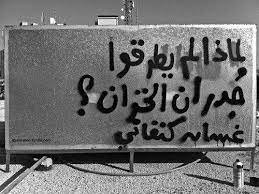
    The last line of Men in the Sun, spoken by Abul Khaizuran, considered by some to be the most famous sentence in Palestinian literature: “Why didn’t they knock on the container walls?”

    I wrote this essay four years ago, in February 2021, for a seminar on modern Arabic literature. It is very much a product of its time, in the sense that it reflects my worldview then, and is not necessarily how I feel today. I would say I’m a much more hopeful person now. But enough about me.

    The subject is Ghassan Kanafani’s novella—a devastating work about three Palestinian refugees, a smuggler, and the unbearable silence that swallows them. Unlike much political fiction, Men in the Sun is neither polemic nor parable. It’s a slow, searching work that renders atrocity through texture, gesture, refusal. I was seventeen when I wrote this piece, but I return to it often. It was the first time I tried to write not just about a text, but with it—staying close to its silences and its grief.

    This essay also won my high school’s prize for best literature paper out of a pool of 5,000, but what stayed with me more than the award was the feeling of having touched something real: the shared ache of diaspora, dislocation, and deferred mourning.

    It feels right to begin The Close Read here. These are the themes I keep coming back to. These are the questions I still can’t answer.


    Kanafani on Ignominy & Anonymity

    Sunt lacrimae rerum. — Vergil, The Aeneid, I.462
    tr.: “There are tears for things.”

    Ghassan Kanafani’s 1962 novella, Men in the Sun, is a centerpiece of Palestinian national literature. With its focus on three Palestinian refugees, the man they pay to smuggle them, and their journey from Basra, Iraq to Kuwait—where they hope to find gainful employment—it renders the massive, overwhelming issue of global refugees fathomable. Kanafani treats the complected lives of these four Palestinian men unflinchingly and a symphonic piece of literature, dense in its motifs and implications, is the result. While the plot reaches its highest pitch in the second-to-last chapter, it is in the final section that its gravity reveals itself. Kanafani depicts the despair of helplessness, and it makes his text universal: to be powerless against massive tragedies—yet to still know of their existence—is what makes us modern. Capturing that universal despair without lapsing into polemic is Kanafani’s true achievement.

    As in classical tragedies, the fates of several characters are weaved together; their stories culminate in their shared journey and eventual deaths. The backstory explains how three refugees of divergent ages and backgrounds—Marwan, Assad, and Abu Qais—meet their eventual smuggler, himself a Palestinian, Abul Khaizuran. This is well-established by that penultimate section, which contains the masterfully executed climax. “Sun and Shade” details how they cross the last checkpoint that stands between them and Kuwait. It is a sweltering day in the desert, and in order to cross, Abul Khaizuran has the three men to hide in the lorry. Despite their protests that it seems dangerously hot, he assures them it will be brief: “Think, in seven at the most I’ll open the cover for you. Remember that, it’s half-past eleven.” Marwan’s only response is to “[look] at his watch and nod.” However, the truly tragic, absurd turn comes when a border official, obsessed with “the idea that his friend had slept with a prostitute” detains Abul Khaizuran with lecherous questions for several torturous pages. Twenty-one minutes later, he escapes, but when he climbs into the trailer, discovers that they are dead. The section ends with him re-entering the lorry, discovering Abu Qais’s shirt there, hastily throwing that out of the truck’s cab, and shakily driving onwards. Here (and it is about midday) he is overwhelmed by unspecific emotion: he is dizzy, confused, sweating heavily and likely crying. Kanafani closes this portion on the question of whether the ‘salty drops’ falling into Abul Khaizuran’s eyes are “tears, or sweat running from his burning forehead.”

    The next chapter cuts to several hours later, in the dark of night. However, bridging that gap is the solemn, subdued section title, « القَبر», which is as misleading as not. On the one hand, it is inaccurate because Abul Khaizuran does not bury the men: there are zero graves. On the other, it is correct, as they share a final resting place: there is a singular grave when there were going to be three (i.e., plural) graves. It is this title that primes us for the imminent scene and its darkness. Darkness is the crucial metaphor of this section: fittingly, Kanafani opens it with details of a dimming, which establishes the time (the same day, around dusk), sounds the thematic keynote (obscurity and shame), and drives the plot forward (the action requires secrecy). This dimming begins with the sun’s setting, but continues: first with Abul Khaizuran driving far away from the light of civilization and towards the municipal garbage dump, and second, with his switching off of the truck’s lights. The darkness serves two functions: it protects him against detection and allows him to be blind to his grim task.

    However, the darkness is an imperfect shield. While insulating him from the obvious grise, it—perversely—amplifies other, more morbid elements. As such, we the readers are immersed in the complete opposite of day: amid darkness and silence, we undergo an inverse sensory experience through (everything but the eyes of) Abul Khaizuran. The primal horror of this section extends and intensifies that of ‘Sun and Shade,’ where just as before, in the darkness, the bodies lose their persons, and the only thing distinguishing them to Abul Khaizuran is how difficult they are to dispose of. How Kanafani situates this scene is subtle: on some level, the plot requires this darkness, but that is just half the reason. Note the continuity between this section and the prior one, where the passengers’ dying moments are not shown to Abul Khaizuran, and so are invisible to the reader. Though Kanafani is clearly comfortable with moving between points of view, he chooses to stay in Abul Khaizuran’s perspective even as the main action separates into the tractor (the driver) and the trailer (the passengers). This arrangement, where we are not forced to watch their death but still must deal with its aftermath, is mimetic of the Palestinian situation: sequestered away from view, cut off from contact, Palestine was—and still quite is—something of a black box as far as news goes. We spectators (which is what we are) do not have to face their faces: hidden from view, their deaths are not anyone’s responsibility. Like our passengers, they get killed, but it is often hard to identify who killed them: that is the effect of, one, modern journalism’s infamous passive voice, and two, deliberate obfuscation of events. However, regardless of how the story is told or not told, the bodies—sometimes, the sole record of those people, and the only proof of the atrocity—are intractably there.

    It is this problem, that of stubborn corpses, which makes the scene so ghastly. The dead bodies seem to have a certain power, even in their lifelessness. While questions of dignity, fraternity, and responsibility are the novella’s entire basis, those issues come into sharpest relief in the resolution: the interactions between Abul Khaizuran and the nameless bodies. This is in part achieved by Abul Khaizuran’s (literal) hermeticism. He is far removed from civilization—on the edge of the desert—and set in utter darkness, without even the moon for company. That detail of the moonless night is masterful: there is something so godless about the total desolation. And of course, I cannot neglect the choice of setting—i.e., the municipal dump—because that is another masterstroke. Whatever indignity there is in mass, unmarked, or shallow graves is completely outdone by the sheer brutality of this particular non-grave.

    Yet, the non-burial is not something wholly depraved—instead, it is an unsettling and complex mixture: tenderness and apathy, compassion and disregard. On the one hand, it represents Abul Khaizuran trying to give his charges some paltry respect in death: he thinks that they will receive an official burial once the city workers discover them in the morning. At the same time, he is no saint in the matter: the decision also represents his abandoning the plan to bury them properly. But that’s just it—is he to blame? He is genuinely exhausted after the day, and could very well expire on the spot; with the consideration of a city burial, leaving the bodies prominently out may be the honorable thing. It is the next event—the looting—that truly muddles a reader’s judgement.

    The looting is the most rarefied turn in the whole book. I think it surpasses even the final sentences in its artistry—especially with, one, how it is almost an afterthought for Abul Khaizuran, and two, how he thinks to not only take their money but Marwan’s watch as well. To me, that watch is the whole book, and is the moment I most remember. Despite the societal belief that corpse looting is one of the most dishonorable acts, the judgement is still complicated: we see Abul Khaizuran’s guilt and faltering, and know that he is not without a conscience. Of course, it is in very poor taste, but he is not so easily condemned. He is only slightly less desperate than his passengers were, and that is the nature of desperation: one lacks the security to say no, and as such, he is not in the position to behave tastefully. Yet his privation does not wholly excuse him here: a dark thought occurs to me: is this not a bigger payout than he would have received? The whole situation recalls the tourist’s earlier comment that “this desert is full of rats [who eat] rats smaller than them” and the ‘law of the jungle’ comes to mind: the wildness is felt acutely when far from civilization.

    The brutal, animal loneliness is the essence of the horror: it forces us to realize that we have no one protecting, watching or guarding us and that there is nobody who will grant us succor or solace. That is a very primal fear. As Abul Khaizuran feels genuine anguish at the end and cries into the desert, there is no one to comfort or understand him. Moreover, he realizes, I think, that there is very little intervening between life and death, and that existence is a matter of luck and a weak social contract: little prevents someone from killing him like that: and who would take care of him then?

    It is a kind of secular theodicy. The checkpoint episode in the chapter preceding “The Grave,” where Abul Khaizuran tells the three men to enter the lorry, illustrates this: the last interaction he has with the passengers is assuring them, “Think, in seven at the most I’ll open the cover for you. Remember that, it’s half-past eleven,” and meanwhile, Marwan’s only response is to “[look] at his watch and nod”—all the more crushingly, as it is the same watch Abul Khaizuran will later take. The sheer ridiculousness forces us to confront the enormity of the situation along with Abul Khaizuran: because of a chatty clerk, three men have died, and though plenty of people are at fault, there is no one truly to blame. In this moment of reckoning, there is no divine presence; even the old gods— the sun, the moon—are gone. He has ventured so beyond the pale of humanity that he has no god to call upon in this moment. He has no way to materially atone: he does not even have people to apologize to. His guilt has to be his expiation: no other penance is available.

    We end on his vox clamantis in deserto, asking a question without an answer. Stricken, alone, in the worst night, he hears the desert call back to him, “Why? Why? Why?” But there is no answer: there was never a ‘why’ to any of it. It is the only fact in a godforsaken world. Ancient societies could take comfort in that “sunt lacrimae rerum,” but here that vanishes: there are no tears for things. This is Kanafani’s ultimate conclusion: in a godless universe, one is only answerable to themselves.

  • The Close Read, 0: Not to Extract, But to Remain

    “What is the meaning of life? That was all—a simple question; one that tended to close in on one with years, the great revelation had never come. The great revelation perhaps never did come. Instead, there were little daily miracles, illuminations, matches struck unexpectedly in the dark; here was one.” — Woolf

    I. Matches in the Dark

    “for it was not knowledge but unity that she desired, not inscriptions on tablets, nothing that could be written in any language known to men, but intimacy itself, which is knowledge,” — Woolf

    Some lines live with you, humming at the edge of understanding. This sentence of Woolf’s, nestled in To the Lighthouse, reached me like that. On my first encounter with this lovely passage, I was a teenager in the eerie quiet of the early Covid lockdown, adrift in Manhattan’s uncanny stillness. But I found her words and felt something slacken inside me. To want to be known—fully, wordlessly—is a longing I carried alone, but no, it was shared. This woman I’d never meet or know reached me at my most unreachable. I read that paragraph over and over until it sank into memory. Now I carry it with me: on walks through the city, atop rain-slicked rocks, at the apex of hikes. It isn’t just beautiful—it’s a kind of tether: a signal that someone, once, reached toward the same ache.

    That sense of being joined is what draws me back to poems as well. The first one I ever loved (the first I ever read, in fact) was “The Love Song of J. Alfred Prufrock” by Eliot. The sheer music of the “There will be time, there will be time” stanza felt like it was metronomically keeping time with something inside me. There are others, too, that arrive like small prayers. “Do I dare / disturb the universe?” returns when I’m on the edge of decision, when some part of me wants to speak with conviction, to honor what I’m feeling, to do justice to the moment ruat caelum. These lines are faithful companions.

    II. Reading Against the Grain

    “Expansion. That is the idea the novelist must cling to.” — Forster

    There was a time when I read to complete a list, to recognize the titles people mentioned in essays—essentially, to feel equipped. I don’t regret it—I got what I wanted, I’ve read enough and read around enough to feel equipped—but I’ve moved on from reading as accumulation and extraction. These days, my interest lies in tension, in friction, in books that press back against what I think and know. What I want most is to dwell inside the texts, to read and reread without trying to solve or resolve. The books I keep closest are the ones that change shape when I return.

    This has made me wary of neatness. When a novel explains too much or closes too elegantly, I doubt its stakes. Complexity isn’t the same as confusion, of course, but I want the sense that the writer followed something unwieldy rather than packaging a thesis. Forster’s idea of expansion feels like an ethical position as much as a technical one, like a kind of structural generosity. The books I care about leave strands loose, characters unfinished, images unresolved. That incompletion is what makes a book stay animate and alive.

    III. Reading as Ethical Encounter

    “All knowledge that is about human society…rests upon judgment and interpretation… Humanism is the final resistance we have.” — Said

    As out of fashion as it seems, I do judge texts. Heavily. I judge when the writing is slack, when the tropes are lazy, when a story moves along the path of least resistance. I don’t demand novelty for its own sake, but I expect a work to push itself—to ask something of its form, its language, its characters. I want it to ask something of its readers, to expect me to rise to its challenge, for there to be serious engagement with the fact it has readers who give a damn.

    That doesn’t mean everything has to be experimental: I read across genre, across register. A mystery novel can be as exacting as a modernist one if it honors the demands of its shape. Read Patricia Highsmith or Dorothy Sayers if you doubt me. But, I still want writers to stretch, to try, to care enough to risk failure. I need to feel that the text has earned the time it takes to read it. I read for beauty and daring, and when a piece lacks those things, I feel a genuine sense of betrayal. In short, the emotional stakes run high for me.

    I also read with a sharp eye for omission. History is made up of fragments and absences, as Benjamin said, and literature often inherits or amplifies them. When the narrative avoids the hard question, when a character’s inner life is flattened or a story’s resolution comes too easily, I feel it. I don’t mean politically correct inclusivity representative enough for the UN—I mean true attentiveness. I want to see the weight of what’s absent. When a text avoids something it ought to face, it feels like a breach of trust, as if I’m being tricked into satisfaction. The texts I return to are the ones that hold themselves accountable—to complexity, to difficulty, to the reader.

    IV. What This Series Will Be

    “Who knows but that, on the lower frequencies, I speak for you?” — Ellison

    This is not a confessional series: the texts come first. I’m present, of course—I’m always the one reading, worse luck—but my life isn’t the main event. If I mention it, it’s because it feels textually necessary, not biographically revealing. I trust the reader to sit with what’s unsaid as well as what’s underlined. If something is withheld, it isn’t coyness. It’s an invitation to focus. What matters here is the structure of attention: the emotional weight, the syntactic gravity, the ethical pressure of the form itself.

    I don’t come to these pieces as a scholar: I’m just a person doing my best to read carefully and think about what that care entails. The texts I include aren’t selected for prestige or alignment. Some are canonical, others are less read, but all of them have marked me in some way. I don’t expect these posts to be definitive, just honest attempts at attention—at remaining. If even a few people take that project seriously, and if I write pieces I’m proud of, then the series will have done what it’s meant to do.