This is a longer post, as I’m documenting my journey in running the NYU League of Linguistics. Herein I give some pretty extensive advice on how to do outreach and build an extracurricular community. When I first joined the club’s leadership team, it had gone quiet. There were myriad challenges involved that required tenacity, creativity, and a willingness to ask for help, and I want to pass on what I’ve learned. This post is aimed at undergrads who find themselves responsible for an academic club and want to deepen its impact.
It was not a fresh start for us—it was a resurrection. The club had existed for at least 15 years, but by the time I got involved, it had gone relatively quiet. So quiet, in fact, that we were placed on probation for failing to meet the university’s minimum event requirement: three per semester. The bones were there—name, charter, social accounts—but the pulse was faint.
What I wanted, at first, was simply a place to talk about language in the company of others who cared. So I asked around: friends in psych, econ, classics, CS. People said yes. So: we made flyers. Secured pizza. Helped to coordinate room logistics, the A/V, a slide deck. We opened with something light and collaborative, and the enthusiasm was immediate.
This year’s schedule is the fullest in the club’s memory, and what’s emerged is more than a club. It’s a project in public linguistics: a way of gathering, questioning, and bringing language to the fore.
A Year in Events
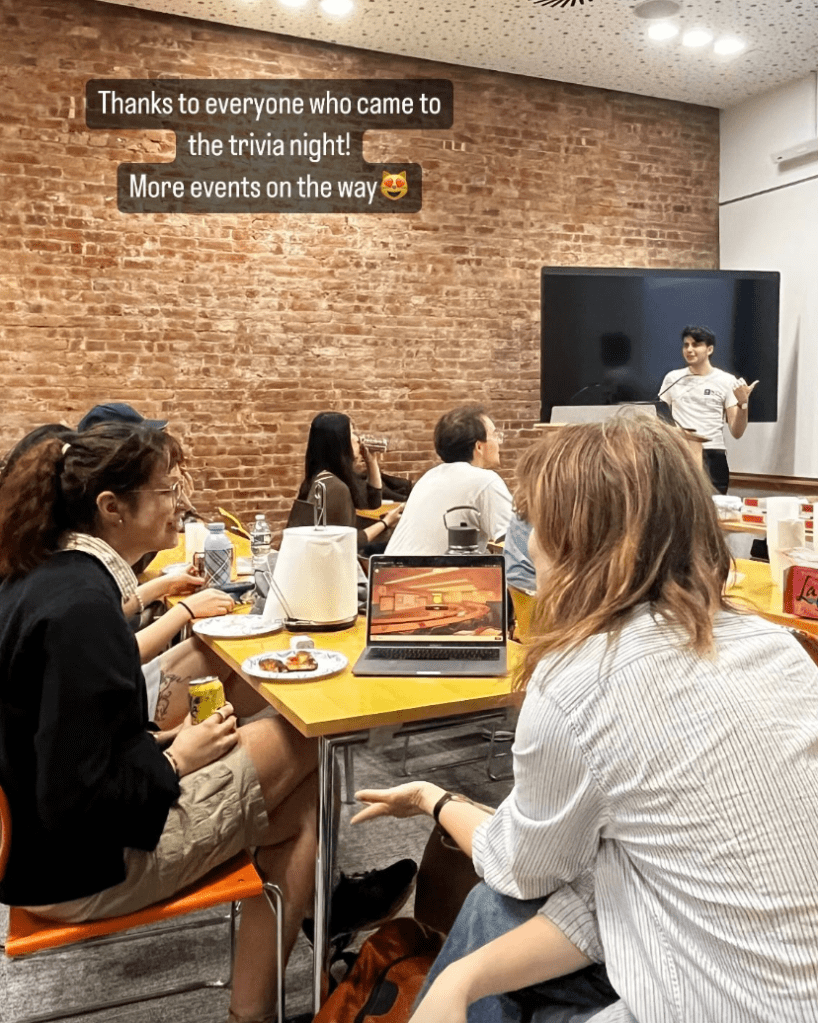
Our calendar this year reflects the range we’re trying to cultivate. We’ve hosted discussion groups, lectures, mixers, and games—all with an eye toward accessibility and intellectual curiosity.
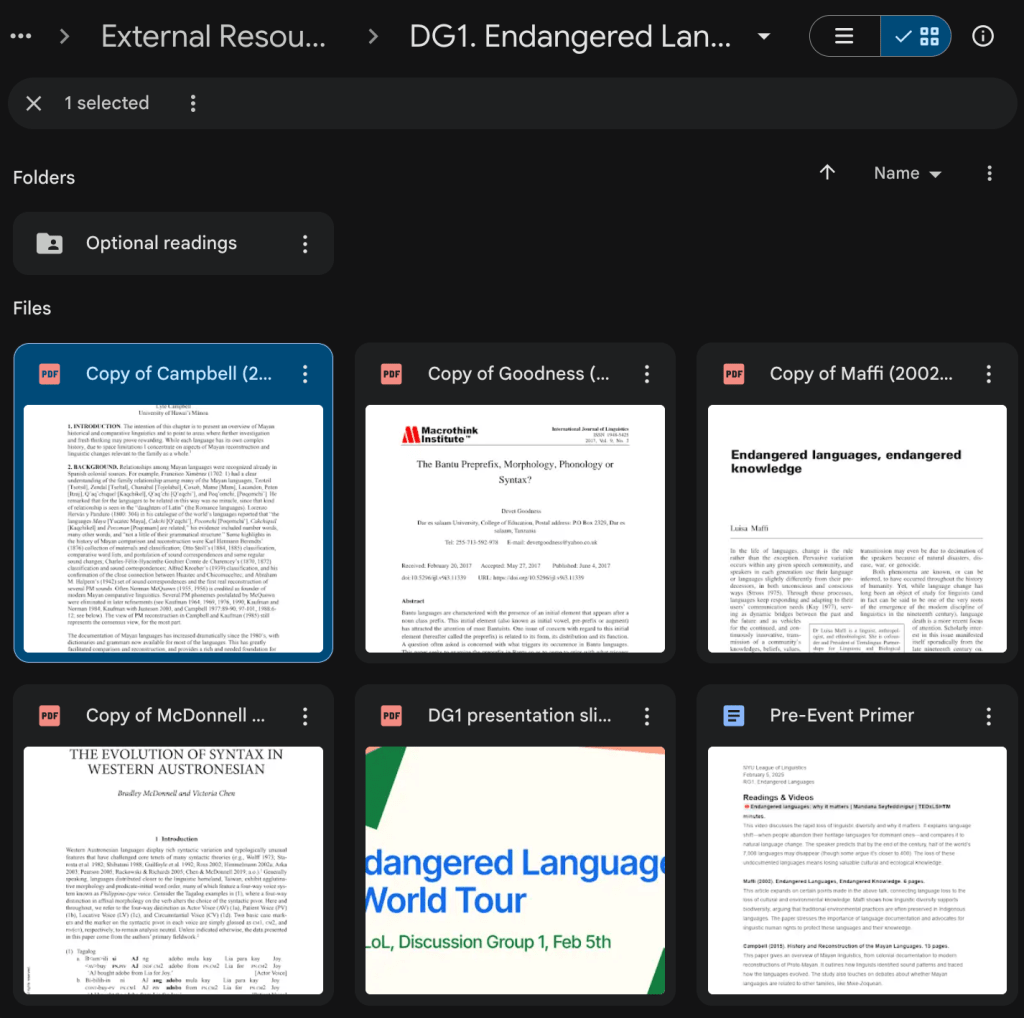
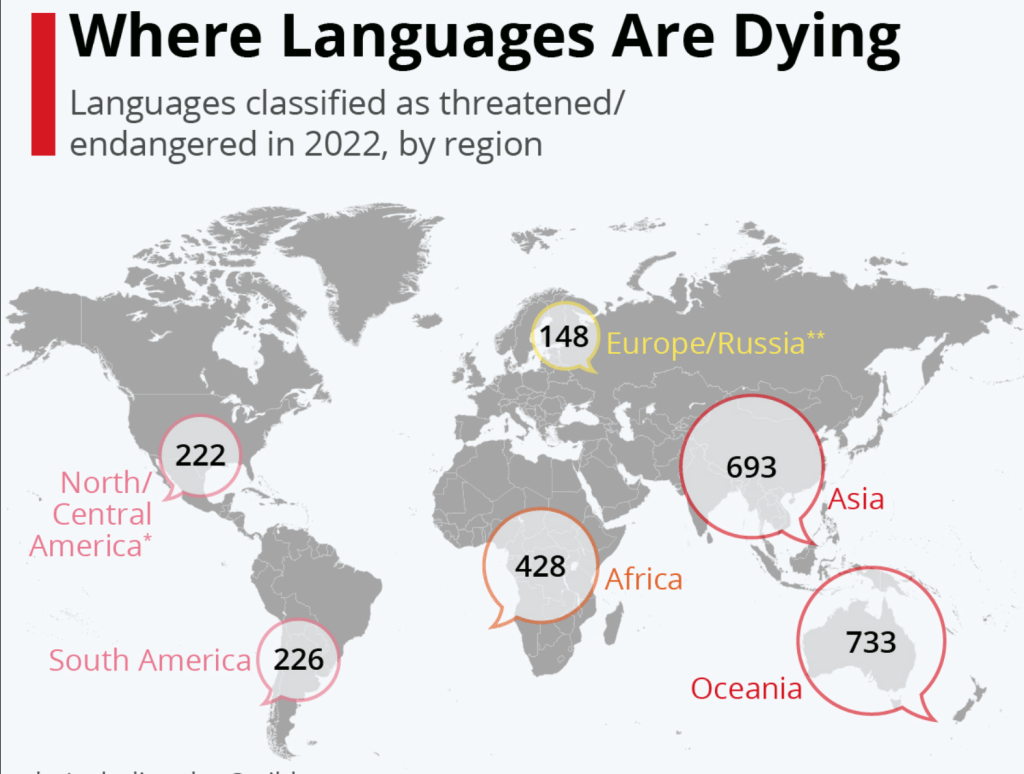
Some of our events have been exploratory and collaborative, like our endangered language discussion series, which combined typology with revitalization ethics. I shaped the curriculum with input from several external linguists, including one whose fieldwork perspective framed the questions we asked. We’re still refining the discussion group format, but we’ve gotten strong feedback from attendees and are working to ensure each one invites curiosity and makes participants feel like they have something to contribute. We’re also developing a language revitalization simulation game, where players role-play as linguists trying to support an endangered language community—combining strategy, theory, and storytelling. We plan to launch that either this month or early next semester.
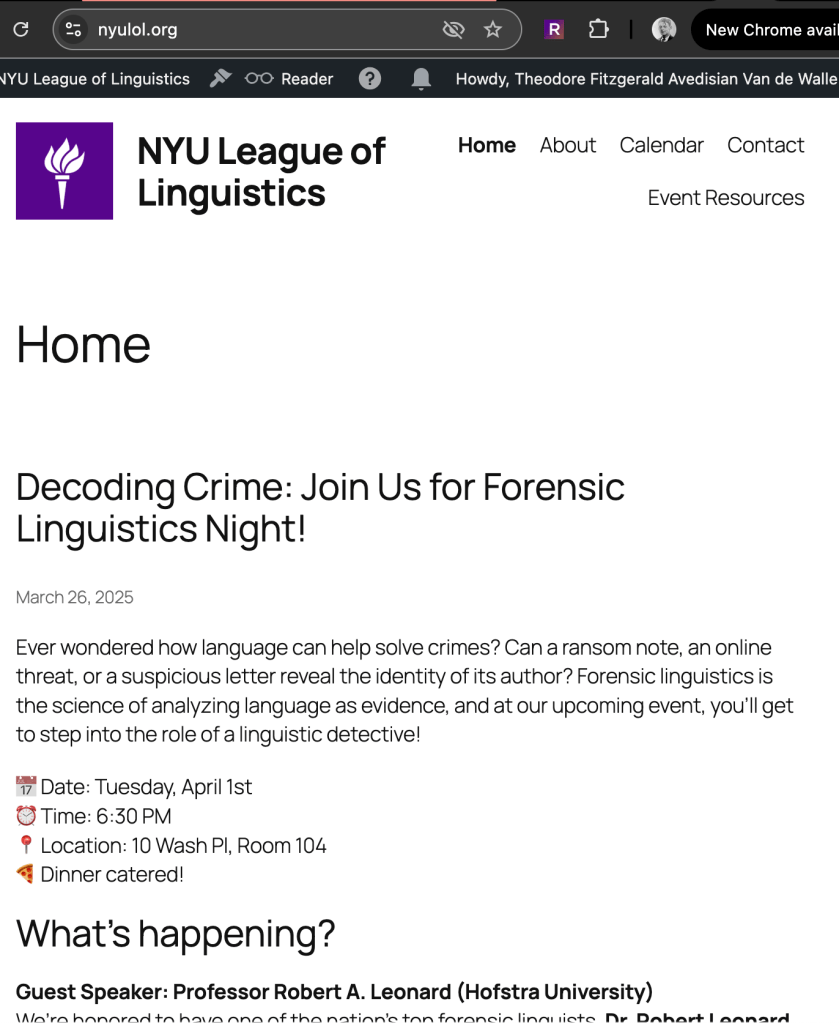
Other events were more formal, like our public lecture with forensic linguist Robert Leonard, and our guest lecture + Q&A with Adam Aleksic (aka @EtymologyNerd) back in March. That last one was quite the logistical feat: over 300 people showed up, 130 of them from outside NYU. We got so much interest within 4 hours of announcing the event that we were forced to pivot fast—changing venues, coordinating multiple livestreams, and ensuring a high-quality recording. It worked. The room was packed, and people stuck around to talk with Adam and amongst themselves for more than an hour after the event ended.
We’ve also leaned into social and community-building events—social hours, study sessions, and, upcoming on April 22nd, an IPA spelling bee. These are playful, but not throwaway: they keep people coming back.
Across all of these, we’ve maintained steady turnout (10–20 people per event, usually), and have been lucky to host guest speakers who’ve generously agreed to visit—many over Zoom, some in person—just because we asked. Cold emails, it turns out, go a long way. Many have responded with striking generosity and curiosity.
The Work Behind the Scenes
Running a linguistics club isn’t just event planning. The role’s orchestration demands have taught me as much as the events themselves. It’s been a lot, but more than worth it to see the community grow.
We’ve gathered feedback both informally and through structured surveys to shape our events around what people actually want: depth without gatekeeping, playfulness with genuine exploration. The results have been overwhelmingly positive. People have told us they’re enjoying the comeback we’re making. What was recently a dormant club is now, again, a hub.
I don’t know exactly what the League will look like in five years. But I do know this: the appetite is there. For conversation, for community, for the kind of language work that feels alive.
And if you’re thinking about starting—or reviving—an academic group at your own university, here’s what I’d offer: start small, but pitch a big tent.
• Mix types of events throughout the term to maintain balance. Social events are more important than some club heads think. Don’t underestimate how much people crave intellectual community, especially at big schools and city campuses.

• Make your extracurricular extracurricular—broach topics that undergrads (and linguists generally) don’t get much exposure to in the ordinary course of their studies. This tends to attract more interest than, say, a rehash of the first lecture of Linguistics 101.
• You can pick niche topics—but frame them with an inviting, curiosity-first question. For example, instead of “Historical Phonology in Armenian,” try “Why Do Some Languages Keep Letters No One Pronounces?”
• Talk to clubs at other schools to get ideas and learn best practices, especially if they have similar contexts—e.g., same school size, size of program, campus type, region. We’ve gotten great ideas from looking at other clubs’ Instagrams and consulting their presidents, such as Adam Aleksic, a.k.a. etymologynerd. An amazing centralized resource is a list of clubs and their Instagrams by Josue Estrada-Cordoba. You can find that here.
• Learn names and get contact info. This really helps people feel known and welcomed.
• Be generous with food—undergrads love a pizza night, and seem unable to resist snacks.
• Document reflections after every event. I use a spreadsheet, you can also use a text document—whatever you prefer. Record expenditure, turnout (projected and actual), and all feedback, positive and negative alike. I also recommend writing down what went unexpectedly well or what fell flat—things you’ll forget six months later but which are so helpful when planning the next iteration.

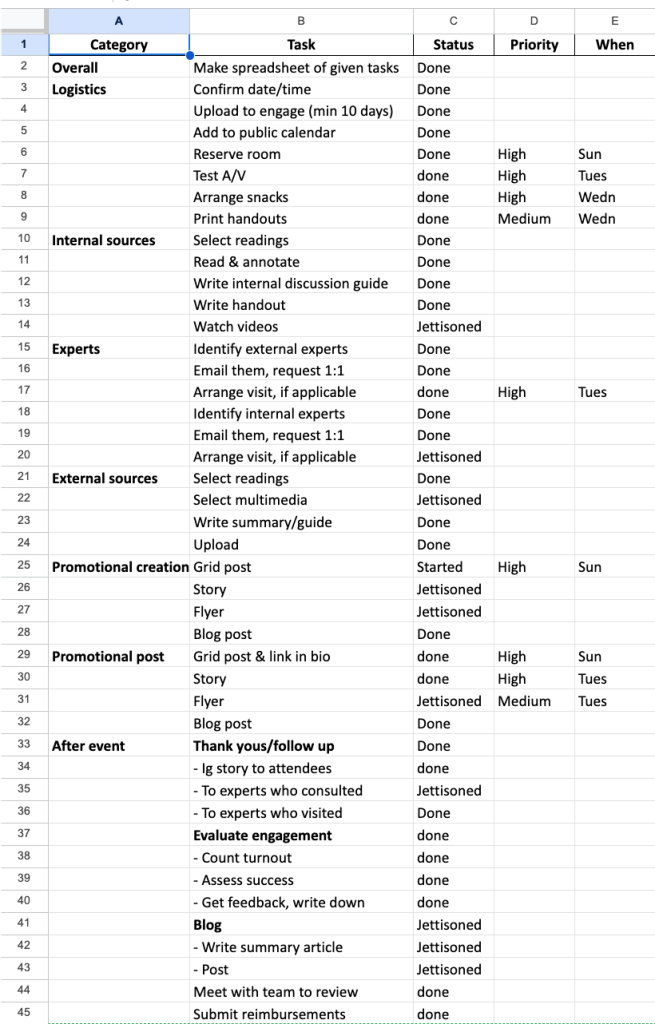
• Another use for spreadsheets in running a club: track your tasks by event and keep your team in the loop. My template is available here—feel free to copy it and adapt to your events. I also recommend adding a column for who’s responsible, if you have formal delegation of tasks.
• Part of the importance of documentation: the more you can demonstrate to your college’s club life board that you’re making an impact on campus, the more likely they are to increase your budget when you apply for the next year.
• Learn your school’s bureaucracy. How do you book rooms, and which are you permitted to use? Who are your points of contact in the administration? What’s your budget? What are you allowed to expense? How often do you have to meet? How does the audio/visual tech work? Can non-affiliates attend, and what’s the process for them accessing your facilities?
• A well-timed cold email holds great power. Aim for the least busy points in a term if you’re reaching out to an academic. This tends to be the first month, and then a few weeks before finals, once midterms are graded and final projects are in the works but not yet submitted. Consult their school’s academic calendar to find out when these points fall.
• Similarly, time events with your own school’s pace, avoiding when turnout is likely to be lowest (midterms, finals, before spring break). The major exception would be hosting a catered study session ahead of an exam period.
• Be sure to advertise: post on Instagram (and promote the account among your members to keep them in the loop), put up conspicuous flyers, and text your friends about upcoming events. You can also ask the department head to circulate events via their email list, and ask professors to tell their classes about upcoming events if it connects to the course they’re teaching.
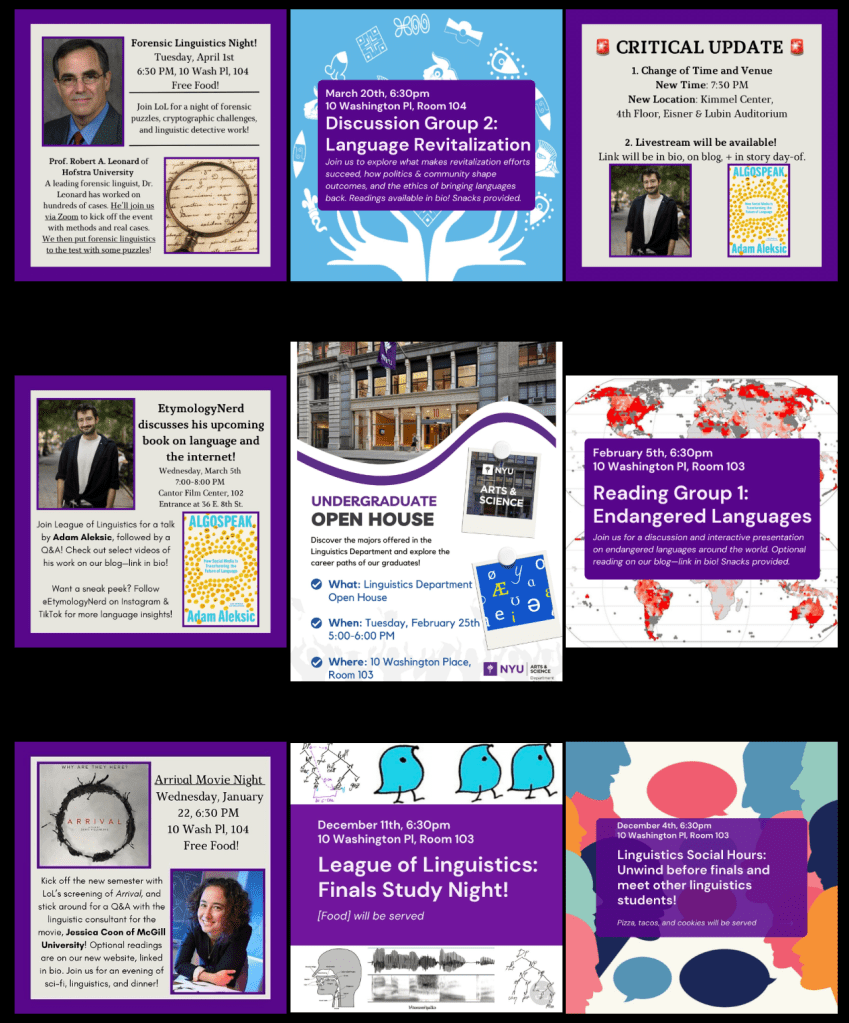
• For design, two tips: 1) Canva Pro ($15/month) has been a godsend for quickly making attractive and attention-getting promotional materials. If it’s in the budget, it’s worth it. 2) Your university may have a design package with a precise guide to logos, colors, proportions, and fonts. Here’s NYU’s. Brown University’s is here, as another example. As the one handling event promotion, I’ve found it invaluable, as it gives something to start from rather than requiring I do everything from scratch.
• Consider making a website like we did, as it’s a great place to centralize your resources, calendar, and follow-up content such as reflections and recordings. However, always ask if all participants are comfortable with both the recording and the posting—transparency is essential. If possible, make events accessible afterward—through recordings, transcripts, or even just slide decks. It lets people engage on their own time, which really matters at large or commuter-heavy schools, or when you have significant alum or non-affiliate interest. I’d recommend WordPress for a clean and accessible template; we upgraded to the personal plan ($36/year, plus a free domain name for the first year) to unlock features such as advanced analytics.


There are also some things we’re considering:
• Making a central onboarding document to build a sort of institutional memory. This would help future board members understand the workings of the club and broader university. I had a protracted learning curve because I didn’t know the answers to the types of questions I listed above in the advice section. I hope to avoid that for next year’s board members, as half of our leadership is graduating.
• Structuring roles clearly. This should prevent anyone from taking on too much responsibility and burning out. It also helps with the awkwardness of more junior members having to delegate tasks to other board members. Defined roles also help newer members know where they can plug in and feel like their contributions matter.
• Having a cleaner system for tracking our budget. We currently don’t have a spreadsheet or any centralized document. Also, this will help with onboarding the event coordinator and treasurer the following year, as they’ll have a sense of what an event costs to put on, and can budget accordingly.
But the most important thing, I think, is to keep asking broad questions that people can relate to—help them connect language to life. Language belongs to everyone, after all, so this is eminently possible. As such, our second discussion group asked: What makes a language worth saving? What languages has your family lost, and why?—questions that sparked conversation across majors, backgrounds, and personal stakes. Many, for example, had grandparents who refused to teach their children their native languages, so no one in the room spoke their ancestral tongue, and many felt a sense of loss for it. Building personal connection to language is a great avenue for exploration, reflection, and discovery. Best of all, everyone is capable of it, no matter who they are or where they come from.
And from there, if the ground is good, your community grows.
 To Wake the Dead