Tag: museums

  • Marginalia 8: What Does It Mean to Be a World Museum?

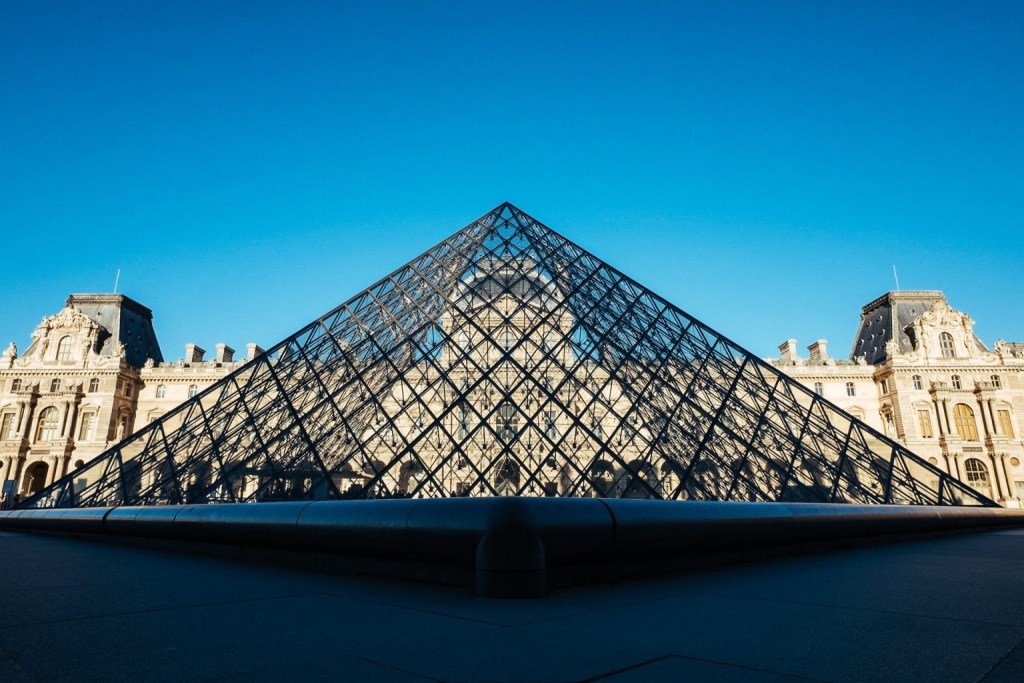
    The symptomatic pyramid: a promise of culmination.

    The British Museum calls itself “a museum of the world, for the world.” The Louvre’s mission statement speaks of a “universal vocation.” The Met, a little more modestly, says it “connects people to creativity, knowledge, ideas, and each other across time and cultures.” These phrases have become talismanic. They promise access, magnanimity, grandeur. But what does it mean to be a world museum, and whose world is it?

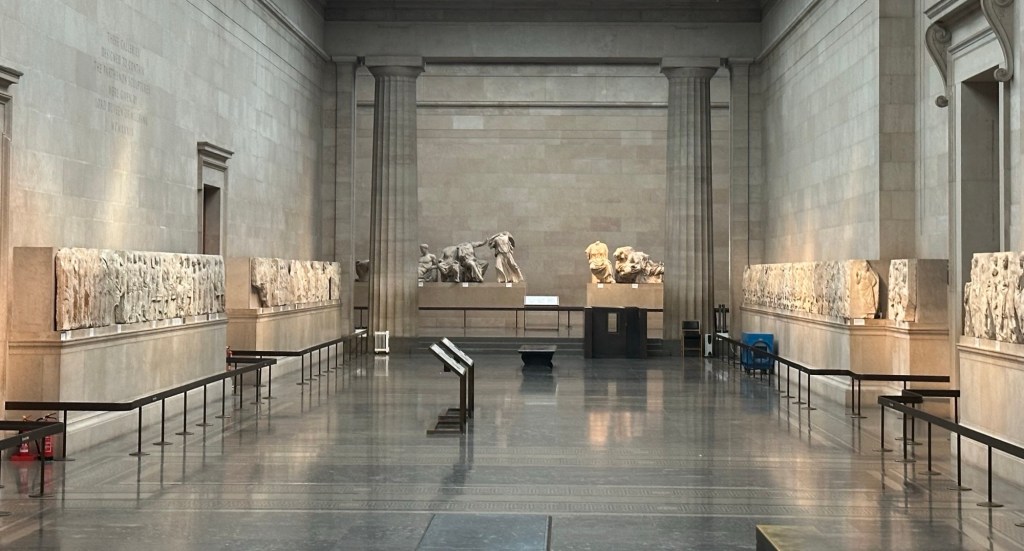
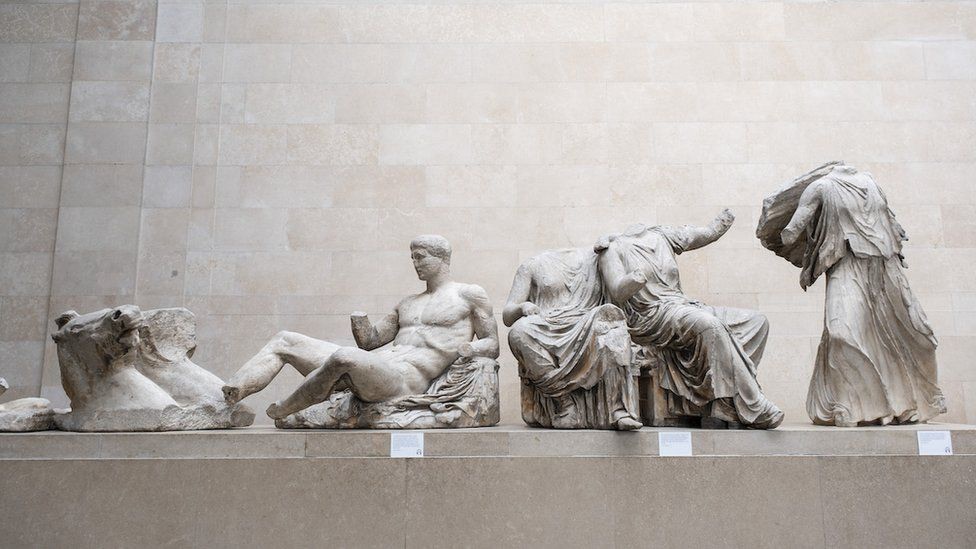
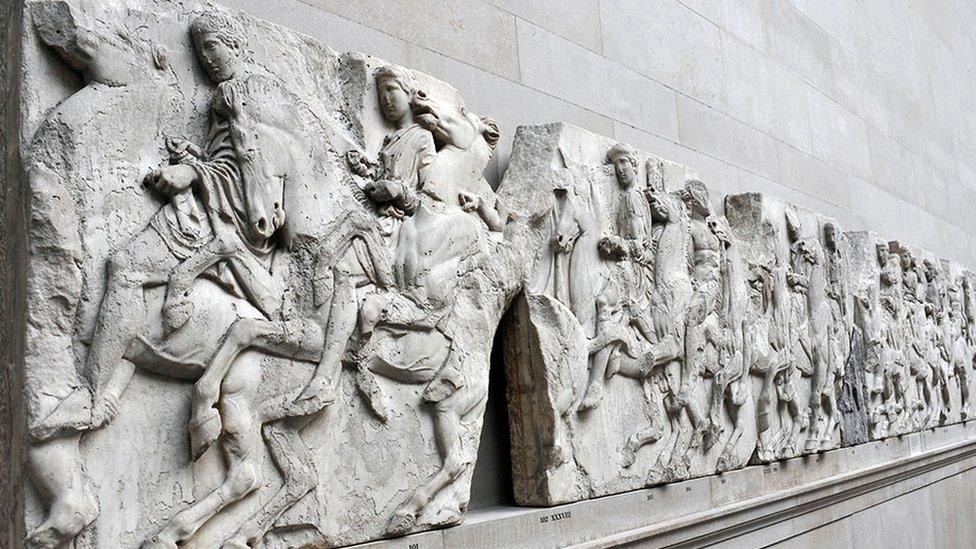
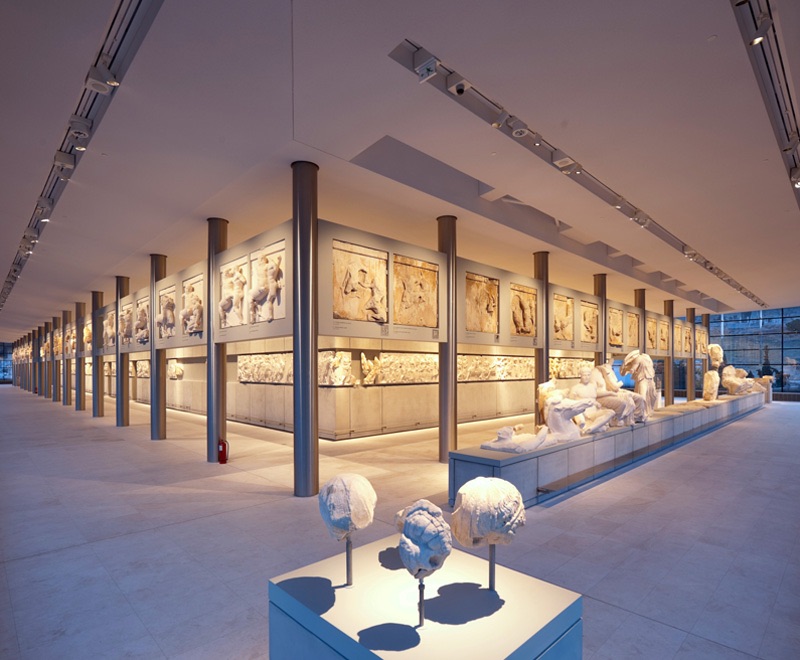
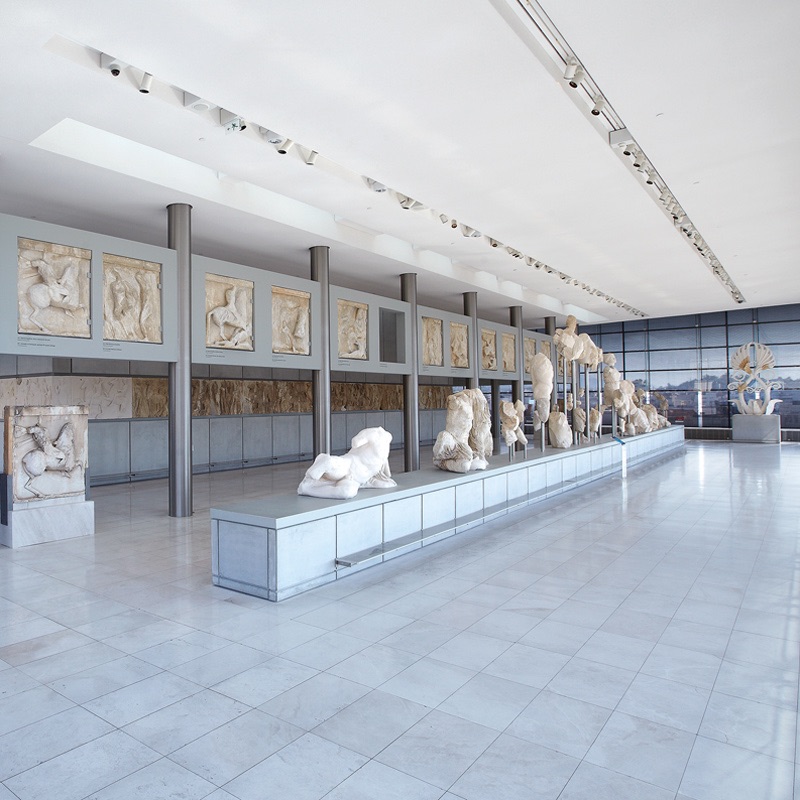
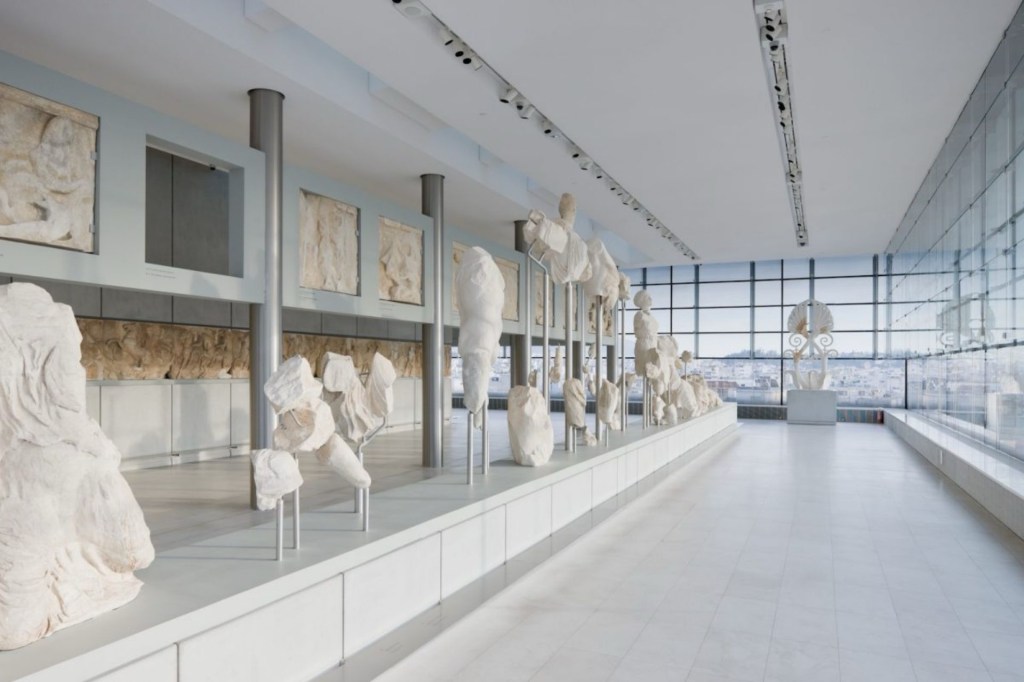
    When I was younger, I thought these museums held it all. Standing in the Parthenon gallery or the Assyrian wing felt like being in an encyclopedia, one that I was very lucky to be in. But the older I get, the more I notice the seams: how each collection is also an argument. All of it constructs something else. A world museum is not the world itself, but a way of seeing the world, arranged by those who could afford to gather it. In short, the map is not the land.

    To call yourself a world museum, then, is to claim authority over every story. That claim was once backed by empire; today, it’s reinforced by expertise. The vocabulary has shifted from conquest to curation, but the logic of centrality persists. London, Paris, New York: each built its “encyclopedic” museum as an axis mundi, in direct peacocking with each other, where the scattered fragments of humanity could be brought to order under one roof. The world, thus, became legible by passing through their benevolent, knowing hands.

    I don’t deny the power of these places. The first time I saw the Gortyn Law Code at the Louvre or the Flood Tablet at the British Museum, I was awed. Those encounters shaped me but made me uneasy at the same time. I felt haunted by my uprooted heritage contrasting with my sense of doikayt, hereness. The very experience of wonder—hush, aura, reverence—relies on a diasporic asymmetry, an asymmetry I live every day. Someone decides what belongs to everyone, and everyone is asked to be grateful.

    It is no accident these places feel like temples to knowledge. Indeed, anthropologists would call the modern museum’s staff a priesthood: a small group endowed with ritual authority, mediating between the public and the sacred. In many ways, curators inherited that role. They are translators of meaning, initiates of context. Their craft is interpretive; often, devotional. But priesthoods harden into hierarchies, which virtually by nature are self-preserving. The museum sphere still largely assumes that legitimacy flows upward: from site to institution, local to metropolitan, fragment to frame.

    That assumption is beginning to crack. Repatriation claims, collaborative exhibitions, digital archives: all have chipped at the singular voice of the museum. The world no longer passes exclusively through its capitals. Scholars in Beirut, Lagos, Oaxaca, and Suva build their own interpretive infrastructures, often more attuned to the objects’ living meanings. Yet the old centers still behave as if stewardship equals ownership and that equals understanding.

    It’s not that I want to abolish these museums; I love them too much. It’s that I want them to recognize their partiality, their provincial irony. To stop speaking for the world and start speaking from within it. There’s a difference between universality and hegemony, between hospitality and possession. A true world museum would not be a pyramid of interpretation with a single apex, but a network of relation—polycentric, provisional, and accountable.

    Imagine, then, being in the presence of absence. Say, a gallery where the label for an Assyrian relief doesn’t begin with its modern accession number but with its modern dislocation: where it was taken from, who lives there now, what stories they tell about it. Think of curatorial text written in dialogue with local archaeologists, artists, and descendants, not as an addendum but as co-authorship. Perhaps even admitting, publicly and without euphemism, that some knowledge is held elsewhere, by people who don’t look like you—that the museum’s own understanding is one layer among many.

    The Louvre’s Richelieu wing and the Met’s Greek and Roman halls both present antiquity as if it naturally culminated in them. It’s a narrative of progress disguised as arrangement. The architecture itself enforces the argument: the marble floors, the neoclassical facades, the skylit atria. They perform continuity between ancient grandeur and modern empire, between those who built and those who display. Even the lighting—bright above Greece, dim over Africa—rehearses a theory of civilization.

    What if hierarchy were not the organizing principle? What if the museum ceased to imagine itself as the mountain peak of culture and instead became an estuary: a confluence of rivers meeting, mixing, and returning to sea? To curate would then mean to host. To interpret would mean to correspond. The museum would stop positioning itself as the final court of meaning and start functioning as a relay: a place where knowledge circulates, pauses, changes hands, changes tack, and flows on.

    Some institutions are inching that way. The Met’s recent Africa & Byzantium exhibition, for all its compromises, attempted to collapse the false wall between classical and not. The British Museum’s partnership with Nigerian conservators on the Benin Bronzes, however belated, acknowledges that expertise is not a Western monopoly. Even the Met’s recent Sargent in Paris asked for visitors to write back at the end of the galleries with their own impressions, verbal or visual. Still, such gestures are often framed as benevolent outreach rather than overdue realignment. The hierarchy survives, just with blunted edges.

    Being a world museum, in the twenty-first century, should no longer mean holding the world but holding out for it. It means designing systems that admit multiplicity, allow objects to be polyglots. It means letting the record include disagreement, letting the catalogue reflect contradiction and minority views. In other words, it means treating the museum not as scriptural but conversational.

    The great irony, of course, is that the artifacts themselves already know this. The stones, the tablets, the marbles—they’ve outlived every last regime that claimed them. They have belonged to many worlds and they will belong to more. The question is whether our institutions can learn the same humility.

    What we (though, who’s we?) call the “world museum” is, at heart, a monument to stillness—the belief that the past must be arrested before it can be understood. But the past never stopped moving; only our institutions did. The museum, devoted to the study of change, is terrified of changing itself. And so the question remains: what does it mean to be a world museum in a world that no longer needs permission to know itself?

    Perhaps it means listening for the languages the objects still speak beneath the captions. It means remembering that the silence of the gallery is just residue. It means giving up the fantasy of the center and learning, at long last, to orbit.

    Until that happens, the museum will remain what it has always been: a beautiful mausoleum of other people’s futures.

    —T

  • Tools of the Trade, 8: Meta-Tools: Courses for Aspiring Philologists and Archaeo-Linguist Hybrids

    I frequently get asked what classes to take if you want to work with ancient languages, inscriptions, museums, or language technology. This post is a reflection—not a blueprint—on how I’ve built a courseload that supports interdisciplinary work in epigraphy, historical linguistics, and digital tools, and what I’d recommend to others just starting out.

    Start with the Languages (But Be Strategic)

    If you’re reading this, chances are you already love ancient languages. So yes—take Latin. Take Greek. But if you have more than one on your list, resist the urge to take them all at once. Instead, start with one—preferably the one with the strongest institutional support—and stagger the rest. I did Latin in high school, Greek in my first year of college, and Akkadian in my second. That pacing gave me room to go deep into each one without burning out. Now, with that foundation, I’m able to handle several languages at the advanced level without losing clarity or joy.

    If it interests you, try to take—or propose an independent study in—a language that uses a non-alphabetic script early on. Whether it’s cuneiform, hieroglyphs, or Linear B, working with a writing system that doesn’t map neatly onto speech will sharpen your sense of what writing is, how it encodes meaning, and how it changes across time. It will also raise questions—paleographic, technological, cognitive—that you may find yourself returning to long after the class ends.

    Take Linguistics Early (You’ll Use It Constantly)

    I’m biased—I’m a linguist—but even if you don’t plan to major in it, an intro to linguistics course will radically shift how you read ancient languages. You’ll start spotting things like vowel gradation, phonological assimilation, and case alignment everywhere. Once you’ve got the basics, courses like historical linguistics, syntax, or phonology can help you engage more confidently with scholarship and identify patterns in inscriptions, dialect variation, or reconstructed forms. Even if you don’t go further in formal coursework, just knowing the lingo goes a long way—and will keep paying off, quietly and consistently, across everything else you study.

    Follow the Inscriptions and Those Who Teach Them

    If you want to work with writing systems or epigraphy, find the people who do that at your institution. In this field, people often matter more than courses. Research your professors. Read what they’ve written. Faculty bios will give you a general idea of their focus, but their CVs are often more revealing—long, yes (I’ve seen them run 50 pages), but worth scanning for article titles and projects that align with your own interests.

    Getting close to those key people might mean enrolling in something tangential—say, an intro to Greek art—just to build a relationship. Or asking if you can do an independent study reading inscriptions in translation. Some of my best classes weren’t labeled “epigraphy” at all—they were seminars where I was encouraged to bring paleographic questions into the final project. In one case, that was Data Science for Archaeology with Prof. Justin Pargeter, a course that shaped my thinking far beyond its original scope.

    Think Across Disciplines, but Choose a Home

    You’ll need a home base—a department that knows you, supports your work, and can write you letters. Having an intellectual anchor like that is not only strategic, it’s also deeply grounding. That said, your course list doesn’t have to stay confined to one department—and honestly, it probably shouldn’t. Academia is moving ever more toward interdisciplinary inquiry, and the best course of study often cuts across traditional boundaries.

    Some of my most formative classes have been outside my major—art history, computer science, even religious studies (Akkadian lives in Judaic Studies at NYU). Let your questions guide you. If you’re wondering why Phoenician letters look the way they do, or what it means to “revive” a dead language, go find the classes that give you tools to explore those questions, wherever they live.

    Just make sure you’re also building depth somewhere. Breadth can open doors—but it’s depth that gets you through them. Grad schools, mentors, and collaborators alike are looking for people who know how to ask big questions, but also how to sit with them for a long time.

    Study Abroad, If You Can

    There’s no substitute for learning ancient languages in place—or at least near the landscapes, museums, and excavation contexts where they come alive. Study abroad isn’t just about location; it’s about intensity, continuity, and community. My time in Greece, especially on digs and museum visits, made Greek less abstract and more human. It exposed me to a range of paths in classics and gave me access to resources—like fragmentary inscriptions in drawers—and rhythms, like reading in the field, that continue to shape how I think about epigraphy and transmission.

    If you’re aiming for grad school or museum work, study-abroad experience shows initiative. It signals that you’ve navigated other academic systems, worked across language barriers, and engaged directly with material culture. If your program includes language immersion—even better. Even if the modern language isn’t your focus, it sharpens your ear and re-situates ancient texts as living inheritances.

    If funding is a concern, don’t write it off. Many programs offer scholarships, and departments often quietly support students who ask early. At big schools like NYU, the key is often finding the right person—the one who knows how to unlock the support already available.

    Don’t Be Afraid of Skill-Based Classes

    If you’re anything like me, it’s easy to stay in the comfort zone of ancient texts and theoretical conversations. But some of the most valuable courses I’ve taken have been hands-on: digital humanities, data science, archaeological methods, computer science. These classes taught me how to manage a dataset, build a research tool, and think across evidence types. They’ve led directly to portfolio projects, study opportunities, and unexpected collaborations—and they’ve made my work in the ancient world more dynamic and durable.

    Leave Room to Be Surprised

    Some of my most formative classes were ones I hadn’t planned to take: a seminar on the topography and monuments of Athens (Prof. Robert Pitt), a deceptively simple primer in Greek archaeology that opened into real depth (Prof. Hüseyin Öztürk), and a course on the structure of the Russian language (Prof. Stephanie Harves). These were spaces where I tested my assumptions and rewired my thinking. Try to leave room in your schedule each year for one course that isn’t strictly “on track,” but that speaks to something curious or unsettled in you. That’s often where real questions begin.

    Last Word: Plan Backwards

    If you’re thinking about grad school or a research career, try working backwards. Look at the programs you might apply to—what do they expect? What languages, methods, or subfields appear in course requirements or faculty research? Then take classes that prepare you for those conversations. The goal isn’t to become someone else’s version of a scholar—it’s to become the version of yourself who belongs in the rooms you want to be in.

    Closing

    When in doubt, ask people. Older students, professors, internet strangers who study Linear B. This path isn’t something I mapped out alone—almost every turning point in my academic life has come from a conversation, an offhand recommendation, or a generous reply to a cold email. I’ve built my way forward through the advice of others, and I’m always happy to pay it forward.

    In a follow-up post, I’ll share how to structure independent study: designing personal projects, sustaining long-term reading, and building a research portfolio beyond the classroom. Done well, this kind of work lets you follow your own questions, test your interests, and create something distinctly your own. It’s also one of the clearest ways to show grad schools and mentors that you know how to learn without a syllabus.

    Stay tuned. And as always, if you’re not sure where to start, I’d love to hear what you’re thinking about.

  • Marginalia, 2: On Diaspora and Scholarship

    Diaspora means a scattering—but not just away from. It’s also a scattering into: people of yours wherever you go. There’s dislocation in that, but also a strange kind of belonging. You’re never quite at home, but also never entirely foreign. We are at home wherever we are, as the Jewish Bundists say.

    I come from the Armenian diaspora. Much of the history I now hold came to me late, in fragments I had to gather myself. So much so that when my family went to Armenia for the 100th anniversary of the genocide, I misunderstood the purpose of our trip. I didn’t yet know what had been left unsaid. I learned the truth online months later. A strange inheritance: delayed, then all at once.

    That moment formed something in me—something about responsibility, memory, and the ethics of knowing. I now see myself as a banner-carrier of the diasporic experience—not just for Armenians, but in solidarity with all displaced and fragmented peoples. Diaspora isn’t a single story but a way of listening, noticing, and asking better questions.

    Ironically, none of the languages I study are mine. I never learned Armenian. I was meant to attend an immersion program in Yerevan in 2020, but it didn’t happen for the obvious reasons. The language now feels like an island—real, reachable, and still far away. It’s typologically unusual and hard to access. And emotionally, I’ve kept it at a distance—not for lack of interest, but for fear of doing it harm.

    Still, the connection shows up. It’s in the care I bring to other people’s histories, in my reverence for displaced traditions, in my work with Semitic languages—speech communities so often marked by rupture. I haven’t yet studied heritage material from my own background, but I carry the stakes of diasporic scholarship into every archive. Distance doesn’t cancel care, it clarifies it.

    My sense of scholarly ethics—especially around archaeology and epigraphy—grows directly from this. I believe in repatriation, in collective self-determination and the right of communities to steward their past. Yes, nations are imagined, but so are all our systems of meaning. So long as national identity structures the world, its claims must be taken seriously.

    Museums, of course, complicate things. Scattering brings both access and erasure. Greek artifacts in London, Mesopotamian seals in New York—these too live in diaspora. There’s value in broader visibility, especially for those who can’t travel. But there’s loss, too: of voice, of sovereignty, of situated knowledge. I think about this often. I haven’t resolved it.

    I don’t just want a life in the library. I want antiquity to be for everyone. I want the past to feel shared, common, alive. I want to show people that our inheritance—linguistic, cultural, intellectual—is truly ours. The more we realize that, the more fully we can meet the present. That’s the gift of diaspora: a way of being scattered that still insists on connection.