Tag: Monthly Reads

  • Monthly Reads, 1: March 2025

    Monthly Reads, 1: March 2025

    There’s no single unifying theme to this list—but there is a feeling. I’m reaching, at once, toward the origins of writing and the frontiers of language technology. It’s structure that’s defining me at the moment: how systems encode meaning, whether that’s Greek orthography or neural networks. And in between, I let myself breathe with fiction—stories that play with form, time, and voice themselves.

    Recently Finished:

    • Epigraphic Evidence
      A technical addition to my current work on inscriptions. Like black coffee: not always easy to imbibe, but quite efficient.
    • Data Science (MIT Press Essential Knowledge series)
      A clean introduction—refreshing for thinking about data both ancient and modern.
    • Ripley’s Game (Patricia Highsmith)
      Cold, elegant, amoral. Hilarious at points. A good palate cleanser between denser texts.
    • The Sequel (Jean Hanff Korelitz)
      Read this mostly for plot, not language—but I love thinking about narrative structures and the great Second Novel Problem.
    • The English Understand Wool (Helen DeWitt)
      Sharp, strange, and delightful. I love a novel about an out-of-touch eccentric navigating the world.

    Currently Reading:

    • Kairos (Jenny Erpenbeck)
      A novel about political and personal time, and a very complicated affair. Thorny for sure.
    • Word by Word: The Secret Life of Dictionaries (Kory Stamper)
      The theme of choice made at all stages of lexicography deeply resonates with me as I encode my own systemic information. Chapters like “Bitch” and “Posh” capture this especially well.
    • Writing and the Origins of Greek Literature (Barry B. Powell)
      I keep coming back to this one in small sips. Chapters go down easy.
    • Greek Writing from Knossos to Homer (Roger D. Woodard)
      Foundational for understanding the transmission of the Greek alphabet. Very well written and thoroughly researched.
    • Algorithms (MIT Press Essential Knowledge series)
      A manageable way to reframe my thinking on rules and structure—not unlike real-life syntactical derivations.
    • Machine Learning (MIT Press Essential Knowledge series)
      Challenging. Still finding where I fit in here. Hoping I can apply to my APEX project by Stage 3.
    • JSON for Beginners
      Very practical for APEX, which is structured with JSON and makes heavy use of standoff annotation. This allows me to encode uncertainty and multiplicitous readings, lowering the amount of assumptions baked into the dataset.
    • Co-Intelligence: Living and Working with AI (Ethan Mollick)
      For someone working on ancient inscriptional data, the future of coworking with AI is too relevant to ignore.

    I wouldn’t call this a reading list so much as a reading state, a snapshot of what it feels like to be in the thick of things: academic work, blog writing, thesis planning, and whatever this slow journey toward modern spoken French is shaping up to be.

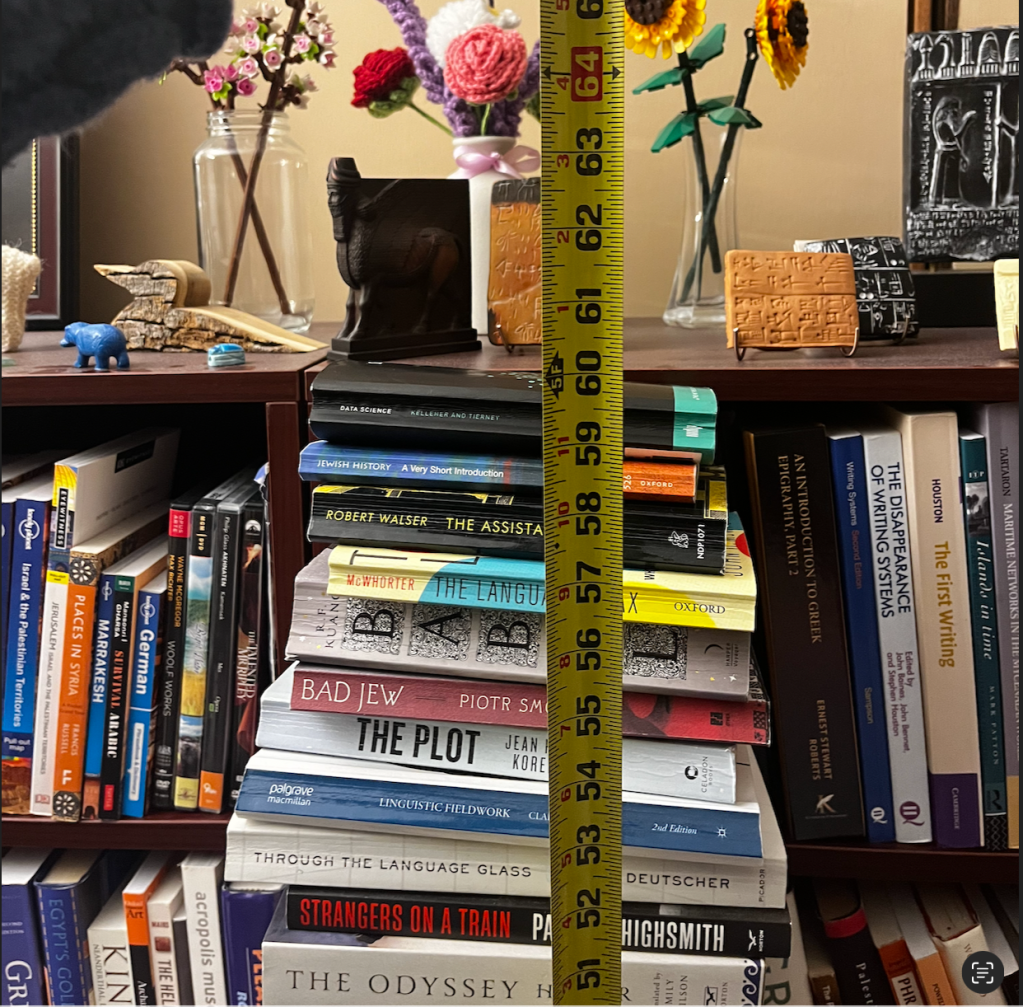
    Picture: I’ve been stacking my recent reads as a kind of personal monument—hoping to match my own height before summer.
  • Introduction (Pinned)

    Introduction (Pinned)

    Welcome to To Wake the Dead — a public research journal by Theo Avedisian.

    I study linguistics & archaeology at NYU, where I also run the League of Linguistics. I’m interested in how ancient languages and scripts evolve—how they’re shaped by material practices and continue to speak across space and time. This blog is a place for me to think aloud and document as I work across Greek, Akkadian, Latin, Phoenician, and French; build tools for studying writing systems; and reflect on the messier, more personal side of learning things slowly and deeply. Generally a record of mind, not of life.

    All writing and research shared here represent my own independent work and views. They are not reviewed, endorsed, or representative of any institution with which I am, or have been, affiliated.

    If you’re new here

    These are a few posts that capture both halves of my project—how I think about things and what I’m trying to build.

    Personal reflections:

    Research & method:

    Series

    The Tritropic Line
    Reflections on reading Homer’s Odyssey in three languages—Greek, French (Bérard), and English (Loeb series, Murray). This combines language study and comparative poetics with the slow joy of close reading.

    Tablets and Tribulations
    A record of my work with Akkadian, of which I’m now in my third semester. Named with as much reverence as chagrin.

    APEX Updates
    This is about my current research project on alphabetic transmission and paleography—mostly Greek and Phoenician. It includes progress notes, technical experiments, and the occasional map or dataset that cooperates. More process-oriented than the dedicated project site.

    Adventures in Materiality
    Here I document my experiments in carving, molding, inscribing, and replicating artifacts. The work is messy, and that’s the point.

    Linguistics for All
    Posts rooted in the events and conversations I help organize, especially through the NYU League of Linguistics. A mix of accessible theory, reflections on public linguistics, and notes on language’s role in community.

    Tools of the Trade
    Every so often, I write about a tool that has helped me read, write, map, or parse. This could be a corpus, a piece of software, or just a clever work-around I’ve devised. One upcoming project: online flashcards of Latin terms found in inscription commentary, making corpora more accessible for non-specialists.

    The Close Read
    Wherein I do a deep dive into a piece of literature, though some nonfiction as well. A fair bit of poetry, as it lends itself to my style.

    Marginalia
    A space for stray thoughts, reflections on studying dead languages as a living person, and the emotional archaeology that sometimes comes with long-term projects.

    This site is where I work in public—testing ideas, gathering feedback, and learning how attention itself becomes a method. Thanks for reading.

    —T

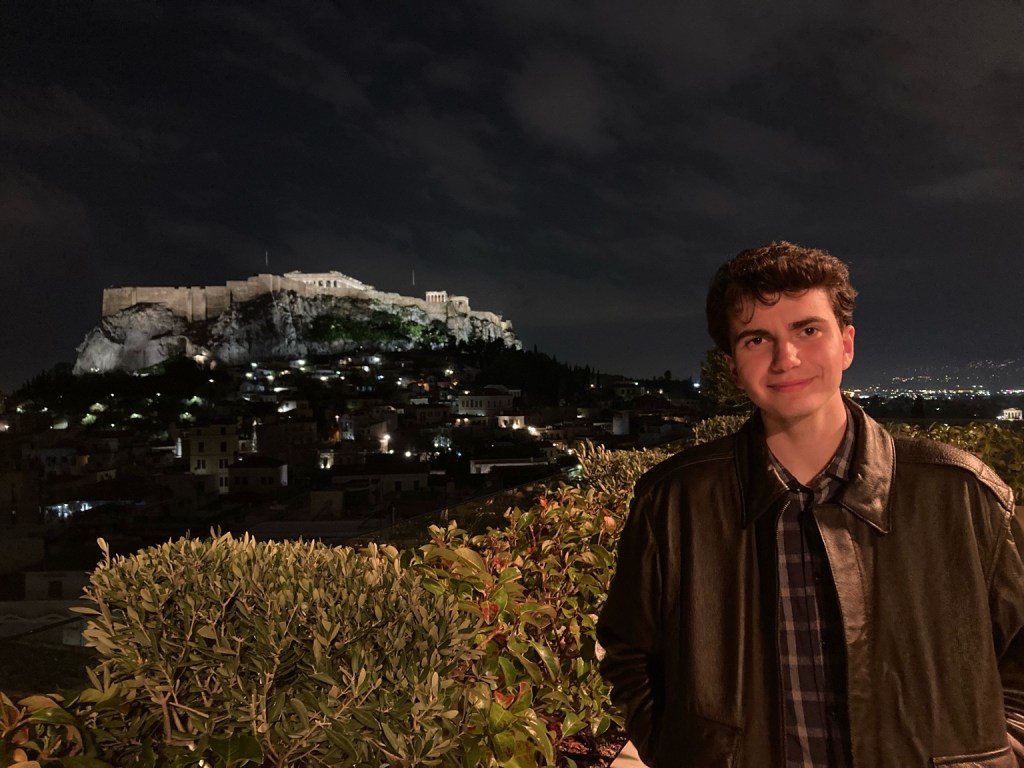
    Picture: Athens, 2021. Birthplace of my epigraphic obsession.