The art of losing isn’t hard to master;
so many things seem filled with the intent
to be lost that their loss is no disaster.
Lose something every day. Accept the fluster
of lost door keys, the hour badly spent.
The art of losing isn’t hard to master.
Then practice losing farther, losing faster:
places, and names, and where it was you meant
to travel. None of these will bring disaster.
I lost my mother’s watch. And look! my last, or
next-to-last, of three loved houses went.
The art of losing isn’t hard to master.
I lost two cities, lovely ones. And, vaster,
some realms I owned, two rivers, a continent.
I miss them, but it wasn’t a disaster.
—Even losing you (the joking voice, a gesture
I love) I shan’t have lied. It’s evident
the art of losing’s not too hard to master
though it may look like (Write it!) like disaster.
Can loss be mastered, or merely rehearsed?
Bishop’s villanelle proposes, in a way, that repetition is training, can be practiced, that form and control can make loss bearable. Her composure in the face of grief is compelling; stoicism always tempts the wounded mind. Yet the paradox of tone and form—her unflappable cant, the neat tercets, its refrain that promises discipline where grief ought to exist—is impossible to ignore.
The form is an argument, and its unraveling coherence speaks to a profound tension. Each recurrence of the refrain weakens its authority, until mastery itself begins to sound like mimicry. The poem’s structure mimics denial. Every return of “The art of losing isn’t hard to master” sounds more and more like self-persuasion than wisdom. There’s this extreme rhetoric of control that is increasingly overtaken by the tremor of what escapes it.
Form as containment—that’s the key thread here. The villanelle is a form obsessed with return, which makes it an ironic vessel for a poem about moving on. Syntax becomes a kind of fate, in my opinion: by choosing this structure, Bishop cages herself in an inescapable neurosis, no doubt intentionally. As with all forms we cling to—habit, routine, scholarship—it becomes both ritual and trap.
Her quasi-enjambment, too (“—Even losing you…”), stretch the villanelle almost to breaking—but never beyond, not in her hands. Whether it counts as enjambment at all is debatable. It’s nearly a continuous sentence across a stanza break, even though the prior sentence ends with a period. The em dash unsettles that finality: was the thought complete, or has the speaker decided, mid-breath, that it wasn’t?
There’s a mirroring at work here. The poem’s discipline enacts the speaker’s composure, yet that same discipline exposes her desperation to stay intact—both for herself and for others. To write a poem is to face inward; to publish it, outward. It is a saving of face and a measured loss of it.
“Lose something every day” sounds like a rule in a manual—domestic(ated), manageable—this impersonal, authoritative voice distances her from the wrenching-away that is loss, and puts her in the territory of disengagement from on high.
But note the escalating scale of loss—keys, an hour, a mother’s watch, houses, cities, continents, you. We can read this as a kind of curriculum: a stoic pedagogy that keeps failing upward. First comes the loss of convenience and access—doors that briefly refuse to open—then time itself; then a representation of time, something that both measures duration and embodies continuity, that in two senses keeps time. After that, a door that will never open again; then larger places, perhaps soured by memory (it’s unclear to me what Bishop means by losing “cities” and “continents”); and finally, the addressee—the greatest loss of all, by the poem’s own logic.
Each stanza revises the promise of “no disaster” until it barely, if at all, convinces. By the end, the loss of the addressee—one person—is weighed against irretrievable things: time, heirlooms, memory embodied in place. Bishop strains believability here; repetition becomes not comfort but corrosion, a gradual wearing away of self.
When does style stop protecting the self and start exposing it? I’d argue that it is the last line: “though it may look like (Write it!) like disaster.”
That parenthetical rupture is where the villanelle—and language itself—betrays its own extent. Here, language reaches its limit: the moment Wittgenstein warned of, when the boundary of speech becomes the boundary of world. The form insists on repetition even at the poem’s most tormenting point. It’s the poem’s scream under its breath, the instant Bishop forces herself to name what she cannot rationalize away.
Even the italics matter. It isn’t “Write it!”—as it would be if rendered simply as an inward thought—but “Write it!”, a specific verbal (but not verb-phrase) imperative. The command exposes writing itself as an act of commitment: to inscribe the unbearable, to fix the truth she can no longer evade. And it’s fitting, as Wilde once said, that “a poet can survive anything but a misprint.”
Yet we cannot ignore the poet’s agency with that line. It’s also an intrusion of authorial will, Bishop interrupting her own line to compel honesty. The command is both a confession and a flouting of form. It punctures the poem’s staid decorum, revealing all that earlier composure was scaffolding for this climactic moment. The poem’s grammar at last fractures under the excruciating pressure of declaring losing the addressee was de minimis.
To return to the above question: Bishop’s control is exquisite, but her vulnerability is captured perfectly in the syntax: note the doubling of “like,” something readers may gloss over, “autocorrecting” in their brain, but it’s this very stutter that beautifully undoes her mastery. The imperative tone has turned to pleading.
The art of losing proves to be an art only because it cannot be perfected.
Close reading itself may be a kind of loss, losing the illusion (delusion?) that meaning is stable, that distance is comfortable. Bishop’s refrain mirrors the scholar’s: returning to the same line, across space or time, until it yields—or refuses to. The art of reading, like that of losing, “isn’t hard to master,” at least until it reaches something too-close, enough to resist impersonal analysis. At that point, one must remain—with the text, with the loss—awake to what cannot be understood without the self.
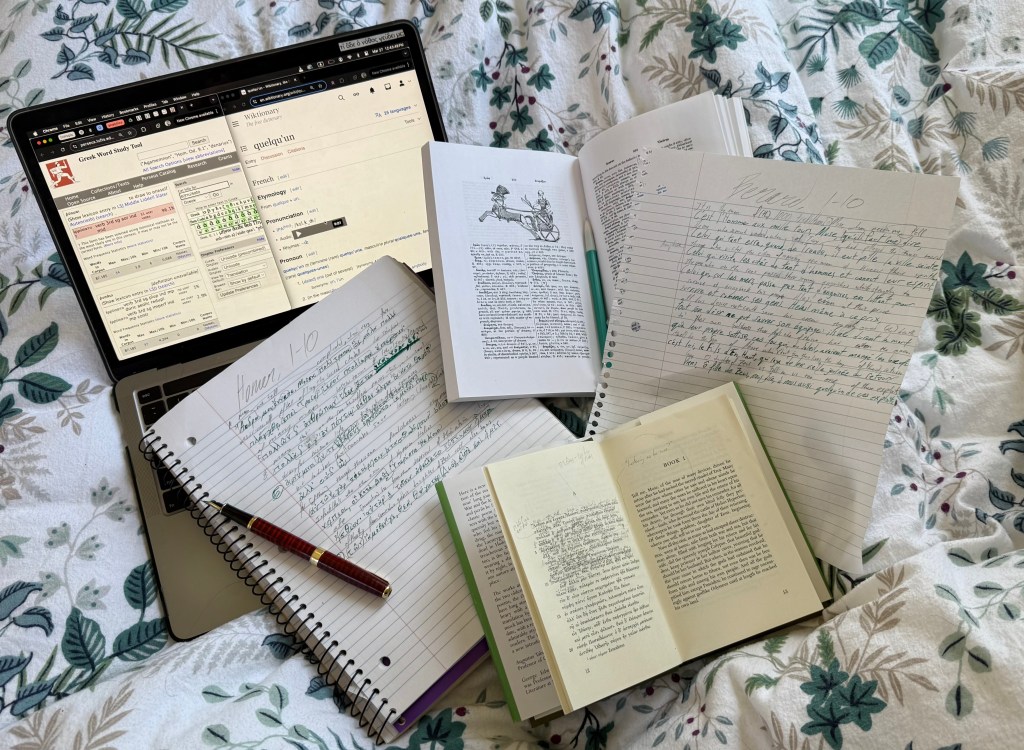
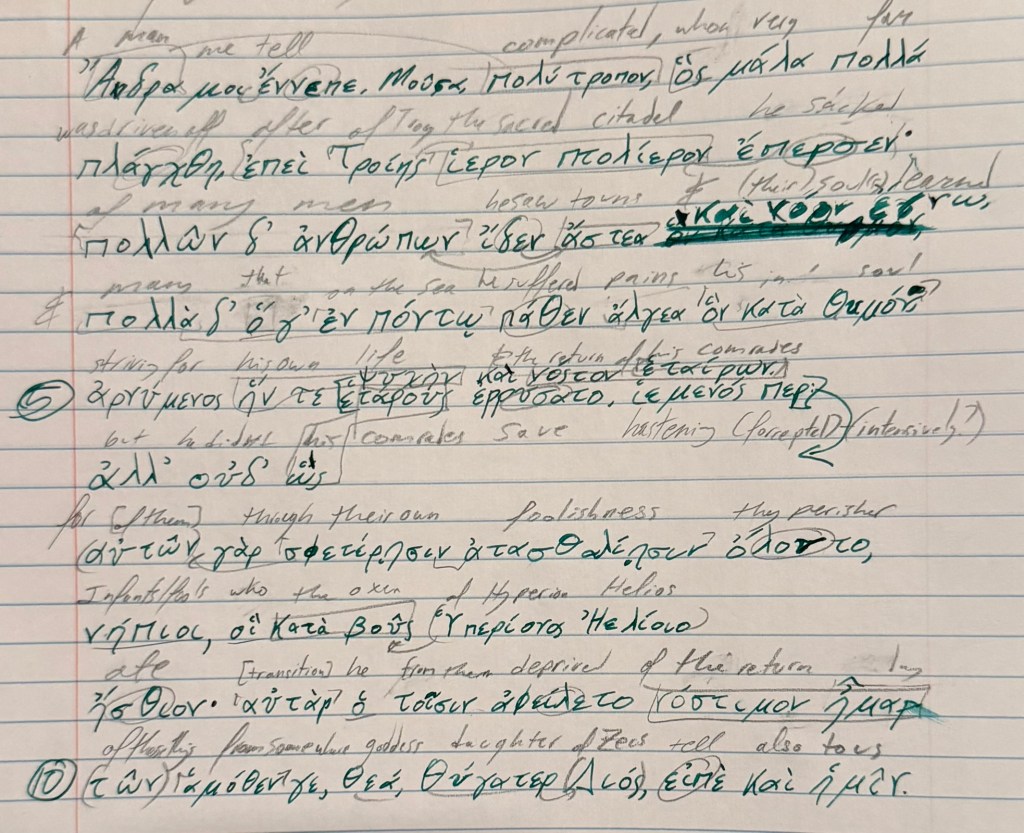
Bishop’s villanelle doesn’t close; it circles. The refrain ends where it began, but altered by exposure. Our poet doesn’t teach detachment in this poem, despite appearing to. The didacticism is rather about endurance through excruciating pain—a theme I can’t help but connect to Homer’s Odyssey, to be driven far (ὃς μάλα πολλὰ πλάγχθη) but still moving, even after two decades of loss after loss. The villanelle, then, like the epic, becomes a ritual for staying with pain until it can be metabolized into form—not escape it, but to give it shape.
 To Wake the Dead