.
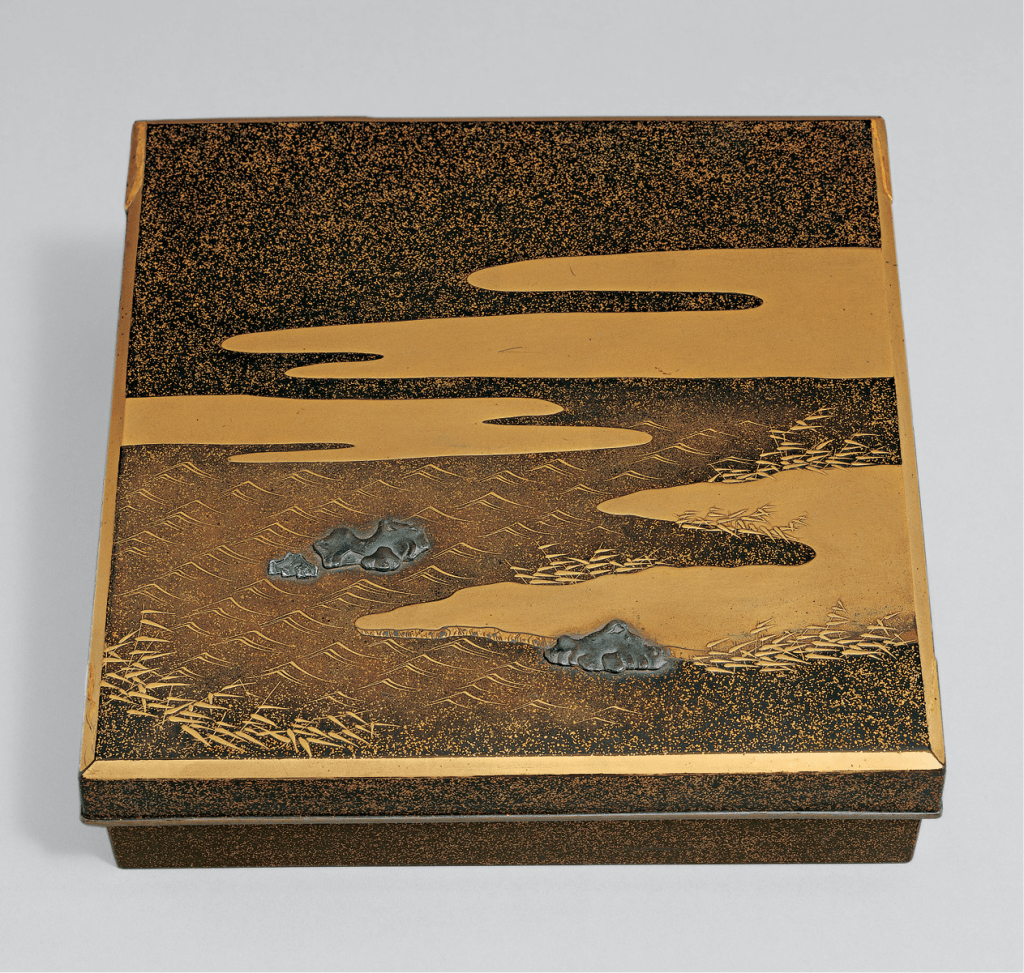
When I was fifteen, I read Jun’ichirō Tanizaki’s In Praise of Shadows without knowing how to name the unease it stirred. I didn’t yet have a project or a discipline, only a sense that technology could be moral in its texture. Even a lamp carries a worldview. Every act of design answers a metaphysical question: what do we think knowledge should look like?
What would a washing machine look like if designed from within a Japanese sensibility rather than imported Western logic? A fountain pen? A bathroom?
Years later, as I train segmentation models and debug recursive loops, I keep thinking about that line. I’ve started to wonder what a machine built from a Middle Eastern sensibility would look like—what it would mean to design software from within the epistemic lineage that produced the alphabets I study, to work from my own heritage as a Middle Eastern researcher myself.
Shadow-Aware Programming
So much of American computer science assumes that clarity is the highest good: explicit is better than implicit, errors must be handled, uncertainty resolved. It’s a worldview of grids, graphs, and proofs, of light without shadow. Even our metaphors for computation—pipelines, flows, stacks—presume continuity and containment.
The world APEX studies was never built that way. The alphabets that seeded Greek writing came from cultures that held multiplicity as a form of precision. Meaning could live in the margin, in the half-seen ligature, in the polyvalence of a single sign. In those traditions, opacity was structure. The text was not a window. Knowledge emerged through relation rather than reduction.
When I look at my code through that lens, I see just how Western its instincts are. Every line by its nature insists on disambiguation; every model optimizes for convergence. What would it mean to build a system that allowed divergence to count as truth?
A Patinated Algorithm
APEX has been my laboratory for this question. Each stage of the pipeline forces me to choose between clarity and care.
American frameworks reward closure: every function must return a value, every process must resolve. But paleography resists closure. The most honest state is, often, a definite maybe. I’ve built APEX’s schemas to accommodate that—to let “uncertain,” “variant,” and “disputed” be valid outputs, not placeholders for failure.
The result is a dataset that behaves more like a commentary tradition than a database: multiple voices, layered readings, recursive disagreements. It’s an architecture of coexistence, a Talmudic litigation of love. In its small way, APEX tries to reintroduce that Middle Eastern mode of knowledge: the one that assumes that understanding doesn’t replace mystery but deepens it.
Inheritance and Interference
This isn’t a manifesto against computation. It’s a recognition that computation, as I’ve encountered it in the American university system, carries unspoken moral premises: that a problem can be solved, that noise can be filtered, that ambiguity is a bug.
But the alphabet itself was a product of a world where those premises didn’t hold. The Phoenician scribes who first shaped letters into repeatable forms were negotiating between sound and sign, god and stone. Their writing system was a compromise between the seen and the said.
When I import their traces into Python scripts and JSON schemas, I feel that interference—the hum between two epistemologies. One seeks light, the other shadow. One builds toward universality, the other toward particularity. APEX lives in that interference pattern. It’s less a reconciliation than a coexistence.
Learning to Code Otherwise
Building a model from a Middle Eastern epistemology doesn’t mean using “Eastern data” or aestheticized, exoticized metaphors. It means rethinking what the model owes to its object. It means writing code that holds its own uncertainty—that treats silence, loss, and contradiction as data types.
I’ve been experimenting with forms of graceful incompletion, so to speak: workflows that stop short rather than forcing a decision, algorithms that surface disagreement instead of averaging it out. I’ve even started thinking about whether uncertainty could be rendered visually—whether the model’s hesitation could be made visible, like a faint shadow under each bounding box. Confidence intervals are a start. I want to take it further.
It feels strange, almost perverse, to build a machine that admits it doesn’t know. But perhaps that’s what ethical technology for the ancient world should look like: something provisional, interpretive, humble enough to remain unfinished.
The Long Continuity
Looking back, this thread has been there since the beginning. Encoding Decisions asked how metadata carries ideology. The Pipeline Problem wrestled with the impossibility of full automation. Teaching the Machine to Read turned that impossibility into method—training the computer not just to recognize letters but to inherit human hesitation.
“Designing in the Shadows” is another turn of that screw. The question now is not how to teach the machine to see, but how to teach it to doubt.
Maybe that’s what it means to build from the epistemology of the alphabets themselves. Treat uncertainty as the condition of meaning.
Coda
Tanizaki wrote that “were it not for shadows, there would be no beauty.”
In American computer science, we’re taught the opposite: that shadow is error, that beauty lies in perfect visibility.
But my work lives somewhere in between. Every day I toggle between these grammars of knowing—between the brightness of the machine and the opacity of the inscription.
If In Praise of Shadows sought a cultural continuity within modernization, perhaps APEX is seeking a moral continuity within computation. I hope, at least, to leave a trace of that other way of seeing—
A system that illuminates, but never over-illuminates.
A technology that leaves the dead a little privacy, while still letting them speak.
 To Wake the Dead