The British Museum calls itself “a museum of the world, for the world.” The Louvre’s mission statement speaks of a “universal vocation.” The Met, a little more modestly, says it “connects people to creativity, knowledge, ideas, and each other across time and cultures.” These phrases have become talismanic. They promise access, magnanimity, grandeur. But what does it mean to be a world museum, and whose world is it?
When I was younger, I thought these museums held it all. Standing in the Parthenon gallery or the Assyrian wing felt like being in an encyclopedia, one that I was very lucky to be in. But the older I get, the more I notice the seams: how each collection is also an argument. All of it constructs something else. A world museum is not the world itself, but a way of seeing the world, arranged by those who could afford to gather it. In short, the map is not the land.
To call yourself a world museum, then, is to claim authority over every story. That claim was once backed by empire; today, it’s reinforced by expertise. The vocabulary has shifted from conquest to curation, but the logic of centrality persists. London, Paris, New York: each built its “encyclopedic” museum as an axis mundi, in direct peacocking with each other, where the scattered fragments of humanity could be brought to order under one roof. The world, thus, became legible by passing through their benevolent, knowing hands.
I don’t deny the power of these places. The first time I saw the Gortyn Law Code at the Louvre or the Flood Tablet at the British Museum, I was awed. Those encounters shaped me but made me uneasy at the same time. I felt haunted by my uprooted heritage contrasting with my sense of doikayt, hereness. The very experience of wonder—hush, aura, reverence—relies on a diasporic asymmetry, an asymmetry I live every day. Someone decides what belongs to everyone, and everyone is asked to be grateful.
It is no accident these places feel like temples to knowledge. Indeed, anthropologists would call the modern museum’s staff a priesthood: a small group endowed with ritual authority, mediating between the public and the sacred. In many ways, curators inherited that role. They are translators of meaning, initiates of context. Their craft is interpretive; often, devotional. But priesthoods harden into hierarchies, which virtually by nature are self-preserving. The museum sphere still largely assumes that legitimacy flows upward: from site to institution, local to metropolitan, fragment to frame.
That assumption is beginning to crack. Repatriation claims, collaborative exhibitions, digital archives: all have chipped at the singular voice of the museum. The world no longer passes exclusively through its capitals. Scholars in Beirut, Lagos, Oaxaca, and Suva build their own interpretive infrastructures, often more attuned to the objects’ living meanings. Yet the old centers still behave as if stewardship equals ownership and that equals understanding.
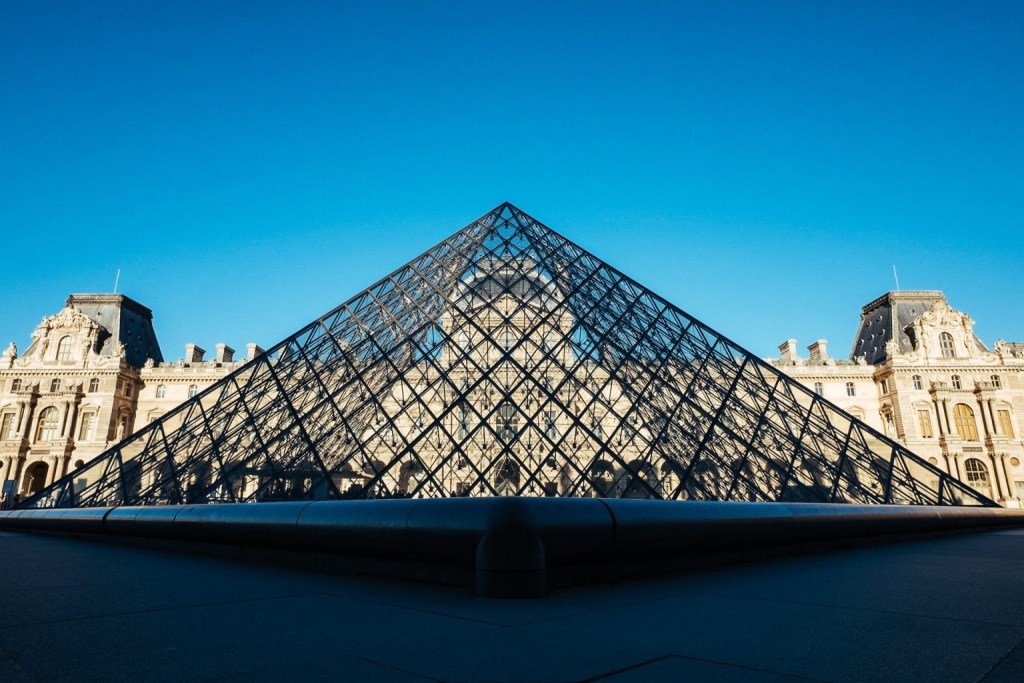
It’s not that I want to abolish these museums; I love them too much. It’s that I want them to recognize their partiality, their provincial irony. To stop speaking for the world and start speaking from within it. There’s a difference between universality and hegemony, between hospitality and possession. A true world museum would not be a pyramid of interpretation with a single apex, but a network of relation—polycentric, provisional, and accountable.
Imagine, then, being in the presence of absence. Say, a gallery where the label for an Assyrian relief doesn’t begin with its modern accession number but with its modern dislocation: where it was taken from, who lives there now, what stories they tell about it. Think of curatorial text written in dialogue with local archaeologists, artists, and descendants, not as an addendum but as co-authorship. Perhaps even admitting, publicly and without euphemism, that some knowledge is held elsewhere, by people who don’t look like you—that the museum’s own understanding is one layer among many.
The Louvre’s Richelieu wing and the Met’s Greek and Roman halls both present antiquity as if it naturally culminated in them. It’s a narrative of progress disguised as arrangement. The architecture itself enforces the argument: the marble floors, the neoclassical facades, the skylit atria. They perform continuity between ancient grandeur and modern empire, between those who built and those who display. Even the lighting—bright above Greece, dim over Africa—rehearses a theory of civilization.
What if hierarchy were not the organizing principle? What if the museum ceased to imagine itself as the mountain peak of culture and instead became an estuary: a confluence of rivers meeting, mixing, and returning to sea? To curate would then mean to host. To interpret would mean to correspond. The museum would stop positioning itself as the final court of meaning and start functioning as a relay: a place where knowledge circulates, pauses, changes hands, changes tack, and flows on.
Some institutions are inching that way. The Met’s recent Africa & Byzantium exhibition, for all its compromises, attempted to collapse the false wall between classical and not. The British Museum’s partnership with Nigerian conservators on the Benin Bronzes, however belated, acknowledges that expertise is not a Western monopoly. Even the Met’s recent Sargent in Paris asked for visitors to write back at the end of the galleries with their own impressions, verbal or visual. Still, such gestures are often framed as benevolent outreach rather than overdue realignment. The hierarchy survives, just with blunted edges.
Being a world museum, in the twenty-first century, should no longer mean holding the world but holding out for it. It means designing systems that admit multiplicity, allow objects to be polyglots. It means letting the record include disagreement, letting the catalogue reflect contradiction and minority views. In other words, it means treating the museum not as scriptural but conversational.
The great irony, of course, is that the artifacts themselves already know this. The stones, the tablets, the marbles—they’ve outlived every last regime that claimed them. They have belonged to many worlds and they will belong to more. The question is whether our institutions can learn the same humility.
What we (though, who’s we?) call the “world museum” is, at heart, a monument to stillness—the belief that the past must be arrested before it can be understood. But the past never stopped moving; only our institutions did. The museum, devoted to the study of change, is terrified of changing itself. And so the question remains: what does it mean to be a world museum in a world that no longer needs permission to know itself?
Perhaps it means listening for the languages the objects still speak beneath the captions. It means remembering that the silence of the gallery is just residue. It means giving up the fantasy of the center and learning, at long last, to orbit.
Until that happens, the museum will remain what it has always been: a beautiful mausoleum of other people’s futures.
—T