In the last decade the digital humanities have built an ethics of stewardship around two frameworks: FAIR and CARE.
Data, we’re told, should be Findable, Accessible, Interoperable, Reusable; its use should uphold Collective benefit, Authority to control, Responsibility, and Ethics. These principles have given structure to a once-couture, even cowboy, practice. They taught us that visibility is a virtue, that openness can be an act of justice. They made data management legible—something one could rate, certify, or defend.
Yet legibility is never neutral. FAIR presumes that clarity is the highest good; CARE assumes that control can be cleanly assigned. Both, however gently, rest on the dream of completeness: that if we organize our data well enough, we might finally see the whole.
APEX lives where that dream dies. The inscriptions I trace resist closure. They are fragmentary, re-inscribed, half-lost. Every dataset carries the tremor of its source—a chipped delta, a missing ‘alep, a surface that refuses to yield. The data, like the stones themselves, is frail.
I’ve begun to imagine a third paradigm: one that keeps FAIR’s discipline and CARE’s ethics but admits that in the humanities, stability is fictional. Call it FRAIL: Findable, Reproducible, Accountable, Interpretive, and Liminal.
- Findable—disappearance helps no one.
- Reproducible—others should be able to retrace our steps, even if they find another path.
- Accountable—provenance and responsibility cannot be dispensed of.
- Interpretive—ambiguity, when recorded, becomes part of the evidence itself.
- Liminal—some knowledge dwells on thresholds: certainty and speculation, artifact and idea.
FRAIL doesn’t replace FAIR or CARE but grows from them. It asks what stewardship looks like when the object of study is itself uncertain, when our task is to hold the fragment without pretending it is whole.
At this point I keep returning to Calvino’s Invisible Cities. In “Cities and Names 4,” he writes of Clarice, a city that forever rebuilds itself from the shards of its earlier selves:
“Only this is know for sure: a given number of objects is shifted within a given space, at times submerged by a quantity of new objects, at times worn out and not replaced; the rule is to shuffle them each time, then try to assemble them. Perhaps Clarice has always been only a confusion of chipped gimcracks, ill-assorted, obsolete.”
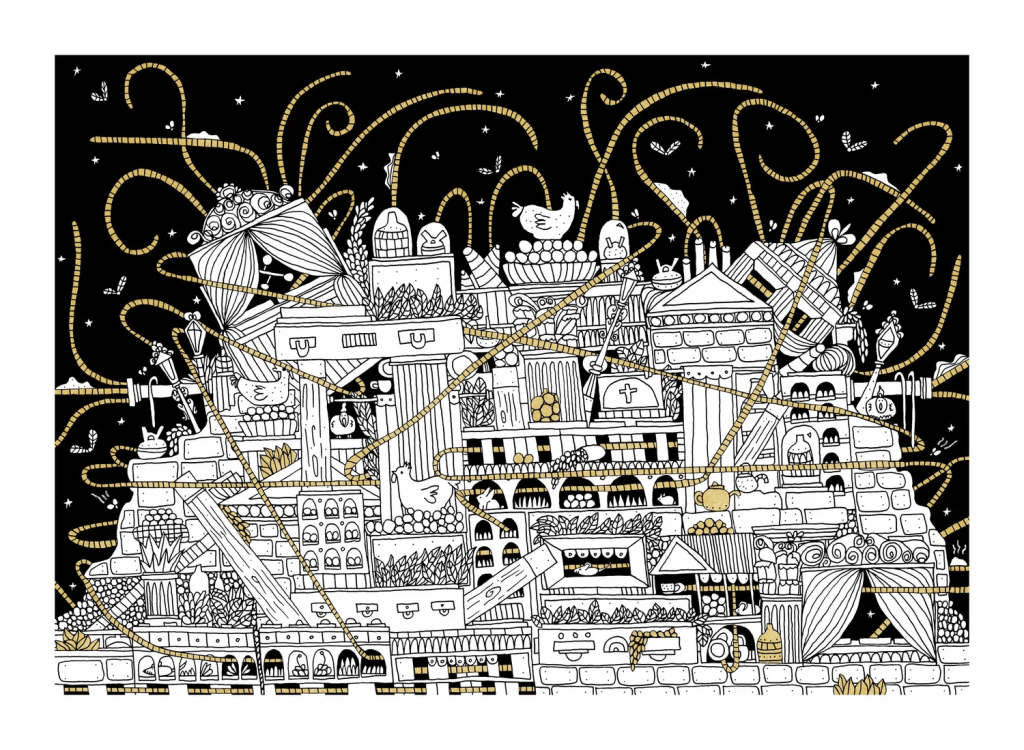
Clarice is every archive we have ever built. Its fragments persist, rearranged with each generation, their order provisional, their meaning renewed by use. FRAIL data lives in that same condition: never whole, yet never lost—structures of care built from what survives. The humanities have always been a discipline of rebuilding Clarice.
To keep data FRAIL is therefore not to weaken it but to recognize its true strength: the capacity to bear transformation without disowning its past. Rigor becomes a form of tenderness. Reproducibility includes hesitation. The dataset, like the inscription, becomes layered, self-aware, and open to rereading.
In APEX I try to move toward that kind of data: technically precise yet narratively honest, transparent about its mediation, willing to show its seams. The goal isn’t immortality but traceability—to make each decision legible without pretending it ends the story.
Perhaps that is what stewardship finally means: not to eliminate fragility, but to hold it safely, as one holds a fragment of Clarice—knowing it has already been broken, and still believing it can be assembled again.


Leave a comment